
Show the formula and working
This turf calculator works out how many rolls of turf you need for a new lawn, with extra for cutting around curves and edges, plus the total cost with delivery. It works in metres or feet for gardens in the UK, Ireland and the rest of Europe. Enter the lawn size, your extra allowance, the roll size and the price.
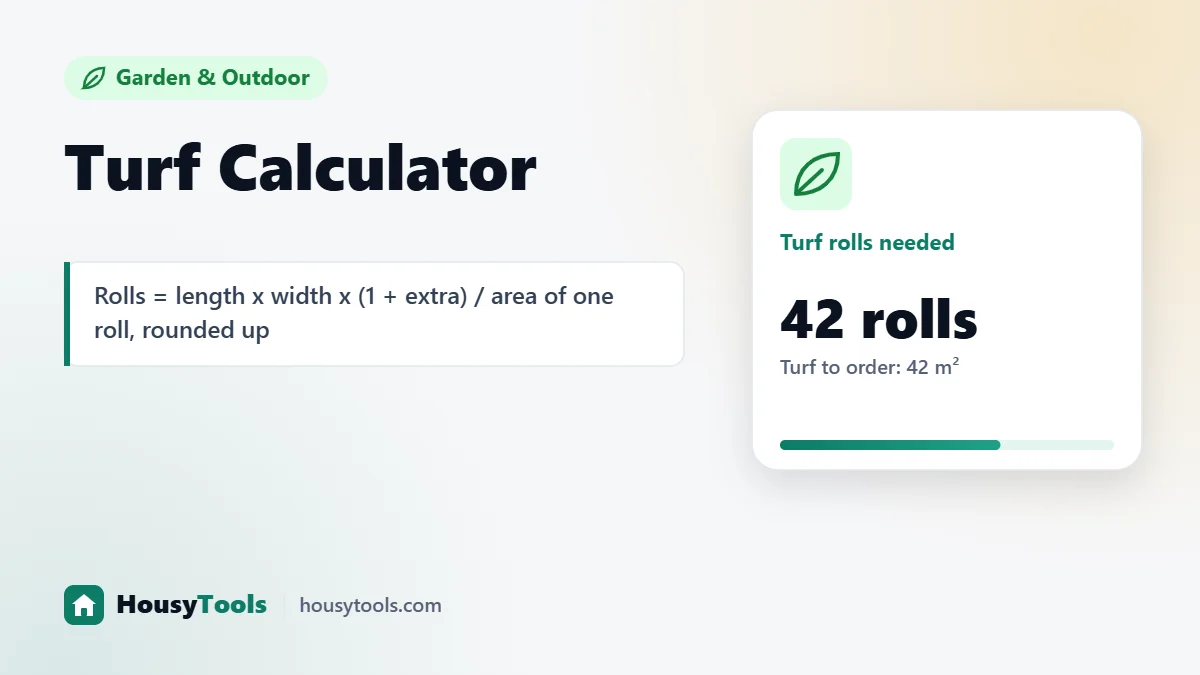
Quick answer: To find how many rolls of turf you need, multiply the lawn’s length by its width, add about 5% for a simple shape or 10% for curves, then divide by the area of one roll and round up. An 8 m by 5 m lawn is 40 m², so with 5% extra it needs 42 rolls of 1 m².
What Is a Turf Calculator?
A turf calculator is a tool that converts the area of a lawn into the number of turf rolls to order, allowing for offcuts and the size of roll your supplier sells.
The formula in plain words: lawn area equals length times width. Add an extra percentage because turf is cut to fit edges, curves and paths, and pieces are lost when you stagger the joints. Divide the total by the area of one roll and round up to a whole roll. Multiply by the price per roll and add delivery for the total cost.
How Do You Use the Turf Calculator?
- Measure the length and width of the lawn and enter them.
- Set the extra allowance for cutting around curves and edges.
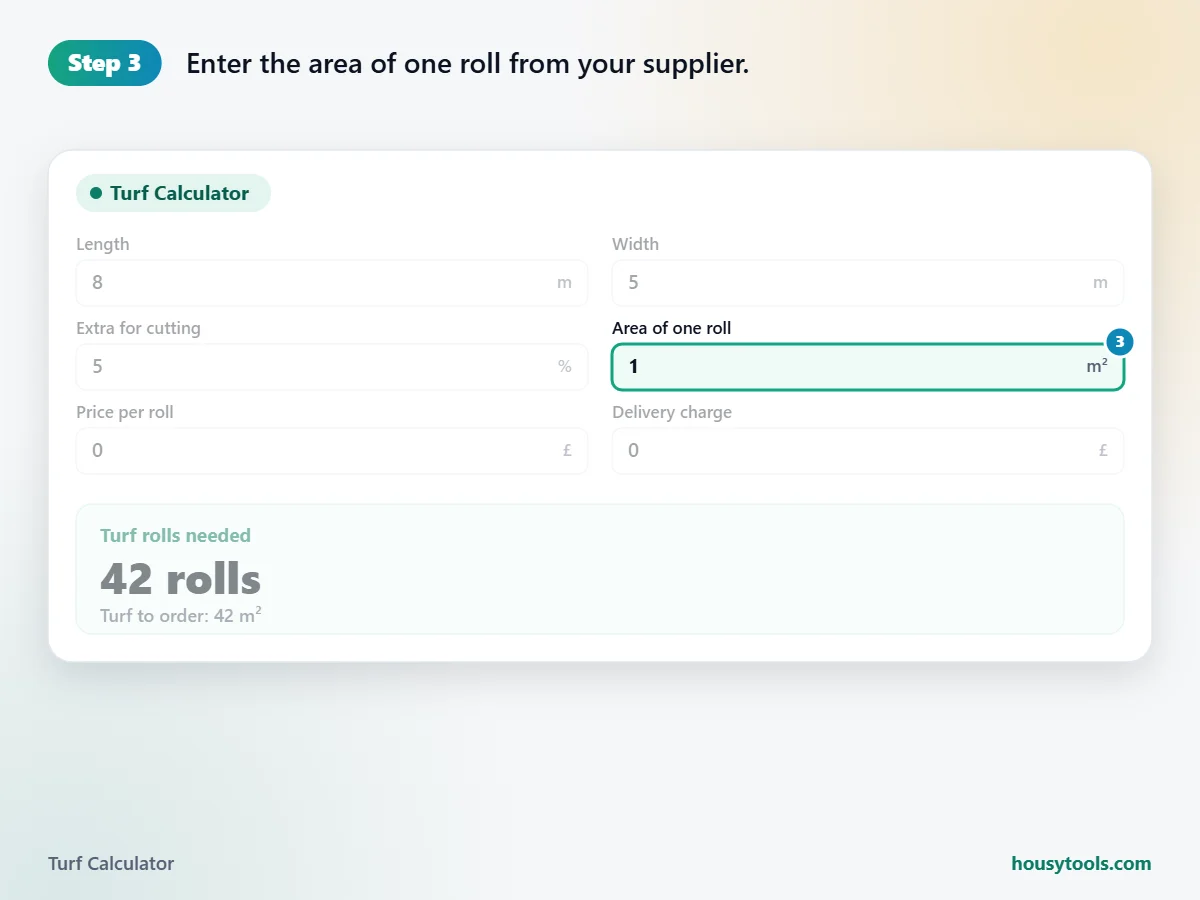
- Enter the area of one roll from your supplier.
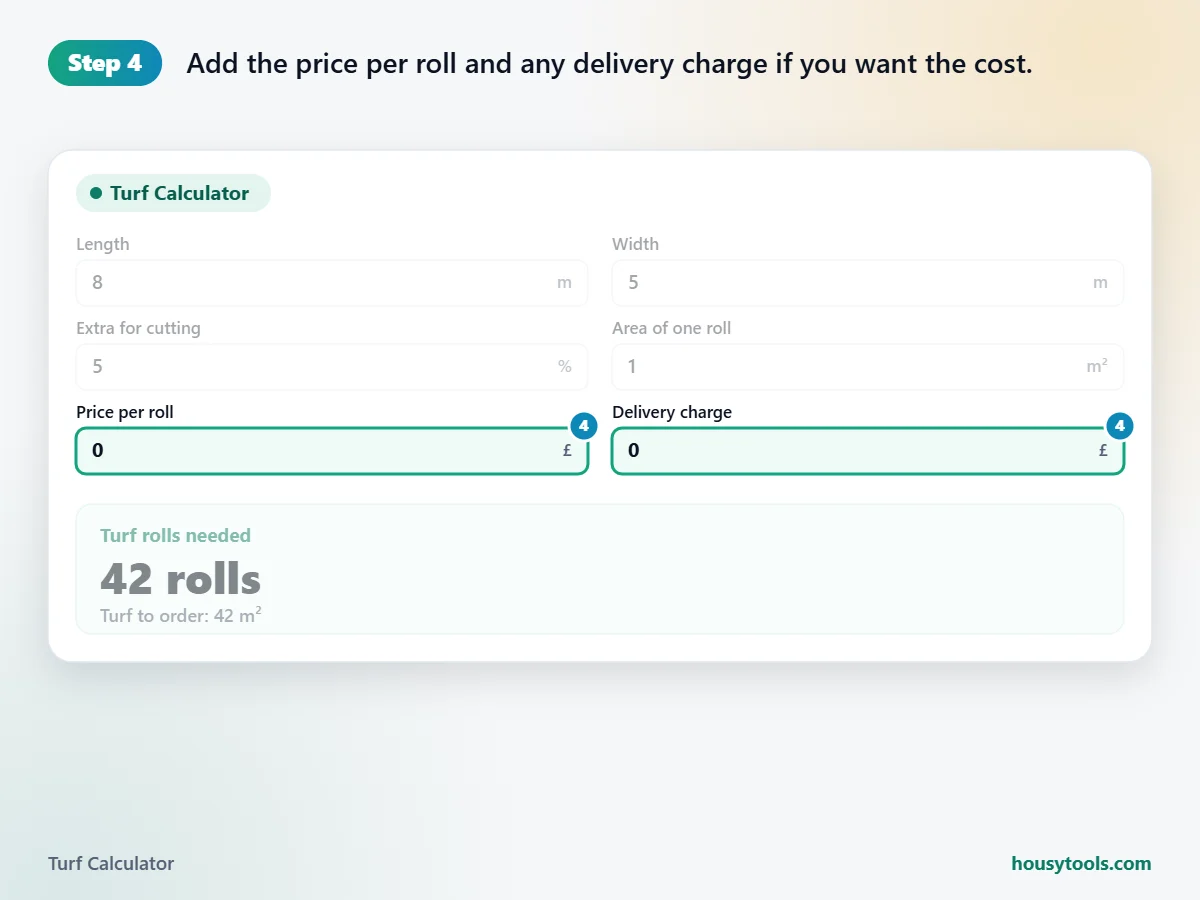
- Add the price per roll and any delivery charge if you want the cost.
- Read the number of rolls, the area to order and the total cost.



How Much Extra Turf Should You Order?
Order about 5% extra for a simple rectangle and about 10% for curved or irregular lawns, because turf is laid in a brick pattern and cut to fit at every edge.
| Lawn area | Rolls with 5% extra | Rolls with 10% extra |
|---|---|---|
| 10 m² | 11 | 11 |
| 20 m² | 21 | 22 |
| 30 m² | 32 | 33 |
| 50 m² | 53 | 55 |
| 100 m² | 105 | 110 |

Short of a couple of rolls on the day is the worst outcome, because a second delivery costs more than a spare roll, and turf from a different batch can look slightly different. Leftover turf is useful for patching worn spots later.
How Do You Measure a Lawn for Turf?
Measure the longest length and the widest width and multiply them, or split an irregular lawn into rectangles and add the areas together.
For a curved lawn, measuring the full rectangle that contains the curve and adding 10% gives a safe order. Mark the shape out with a hose or string first, then measure. If you are levelling or improving the ground before laying, the topsoil calculator works from the same length and width.
When Is the Best Time to Lay Turf?
Turf is easiest to establish in mild, damp weather, so autumn and spring are usually the best times in the UK, while hot, dry spells need far more watering.
Whatever the season, turf is a living product that starts to deteriorate soon after it is cut. Order it for a day you can lay it, prepare the ground first, and keep it watered until the roots take hold. The RHS guide to lawns covers soil preparation and aftercare in detail. If you have more time and less budget, the grass seed calculator shows the cost of growing a lawn from seed instead.
Worked Example: A Curved 9 m by 6 m Lawn
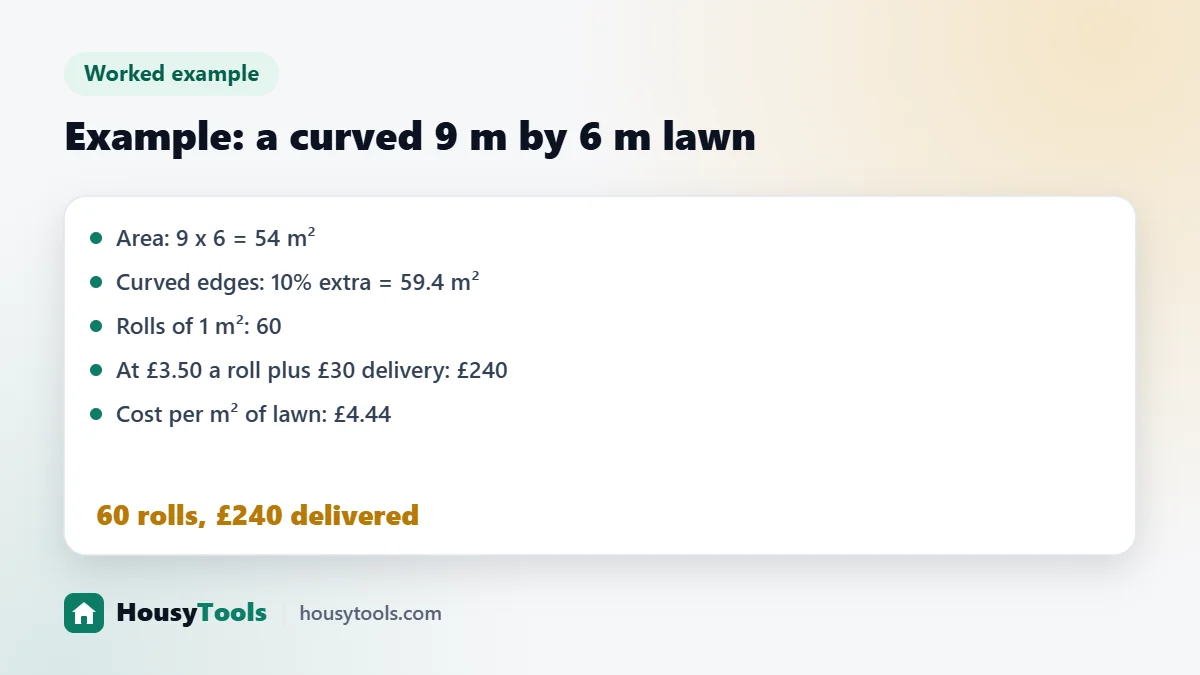
Example: a family is laying a new lawn of about 9 m by 6 m with a curved border, using 1 m² rolls at £3.50 each and a £30 delivery charge. Prices are examples.
- Area: 9 x 6 = 54 m²
- With 10% extra for the curves: 59.4 m²
- Rolls: 59.4 / 1 = 59.4, rounded up to 60 rolls
- Turf cost: 60 x £3.50 = £210
- Total with delivery: £240, or about £4.44 per m² of lawn
A practical tip: lay the first row along the longest straight edge, then work outwards from a plank so you never stand on freshly laid turf. Stagger the joints like brickwork and push each piece tight against the last.
Turf or Artificial Grass?
Real turf costs less to buy and stays cooler underfoot, while artificial grass costs more up front but needs no mowing or watering.
Artificial grass is sold off wide rolls rather than in small pieces, so the artificial grass calculator works out the best layout and the joining tape you need. Many people choose real turf for family lawns and artificial grass for shady or heavily used corners.
Turf Calculator FAQs
How many rolls of turf do I need for 50 m²?
With 1 m² rolls and 5% extra, you need 53 rolls. For a curved lawn, allow 10% and order 55 rolls.
How big is a roll of turf?
Many UK suppliers sell rolls of 1 m², but sizes vary between suppliers and products. Check the roll size before ordering and enter it in the calculator.
How long can turf stay rolled up?
Not long. Turf is best laid on the day it arrives, especially in warm weather, because rolled grass heats up and starts to yellow.
How much does turf cost per m²?
Prices vary by supplier, quality and delivery distance. Enter the price per roll and delivery charge from your quote to see the total and the cost per m² of lawn.
Do I need topsoil before laying turf?
On poor or uneven ground, a layer of good topsoil helps the roots establish. Rake it level and firm it before laying. The topsoil calculator works out how much you need.
Can I lay turf in winter?
It is possible in mild, unfrozen spells, but never on frozen or waterlogged ground. Autumn and spring are usually easier.
Checked October 2026. Sources: RHS lawn advice, supplier product information for roll sizes.