
Show the formula and working
This raised bed soil calculator works out how much soil you need to fill one or more raised beds, and splits it into compost and topsoil so you know how many bags of each to buy. Enter the inside length, width and height of the bed in metres or feet, the number of beds and the mix you want, and it adds a little extra for the settling that always happens after the first watering.
Quick answer: To work out how much soil a raised bed needs, multiply the inside length by the width by the height in metres, then by 1,000 for litres, and add about 10% for settling. A 2.4 m by 1.2 m bed that is 30 cm high holds 864 litres, or about 950 litres with settling, which is 19 bags of 50 litres.

What Is a Raised Bed Soil Calculator?
A raised bed soil calculator is a tool that converts the inside size of a raised bed into the volume of growing mix needed to fill it, and the number of bags of each ingredient.
The formula in plain words: volume equals inside length times inside width times height, times the number of beds. Because fresh soil and compost sink after watering, the calculator adds a settling allowance. The total is split by the share of compost you choose, with the rest as topsoil, and each part is divided by the bag size and rounded up.
How Do You Use the Raised Bed Soil Calculator?
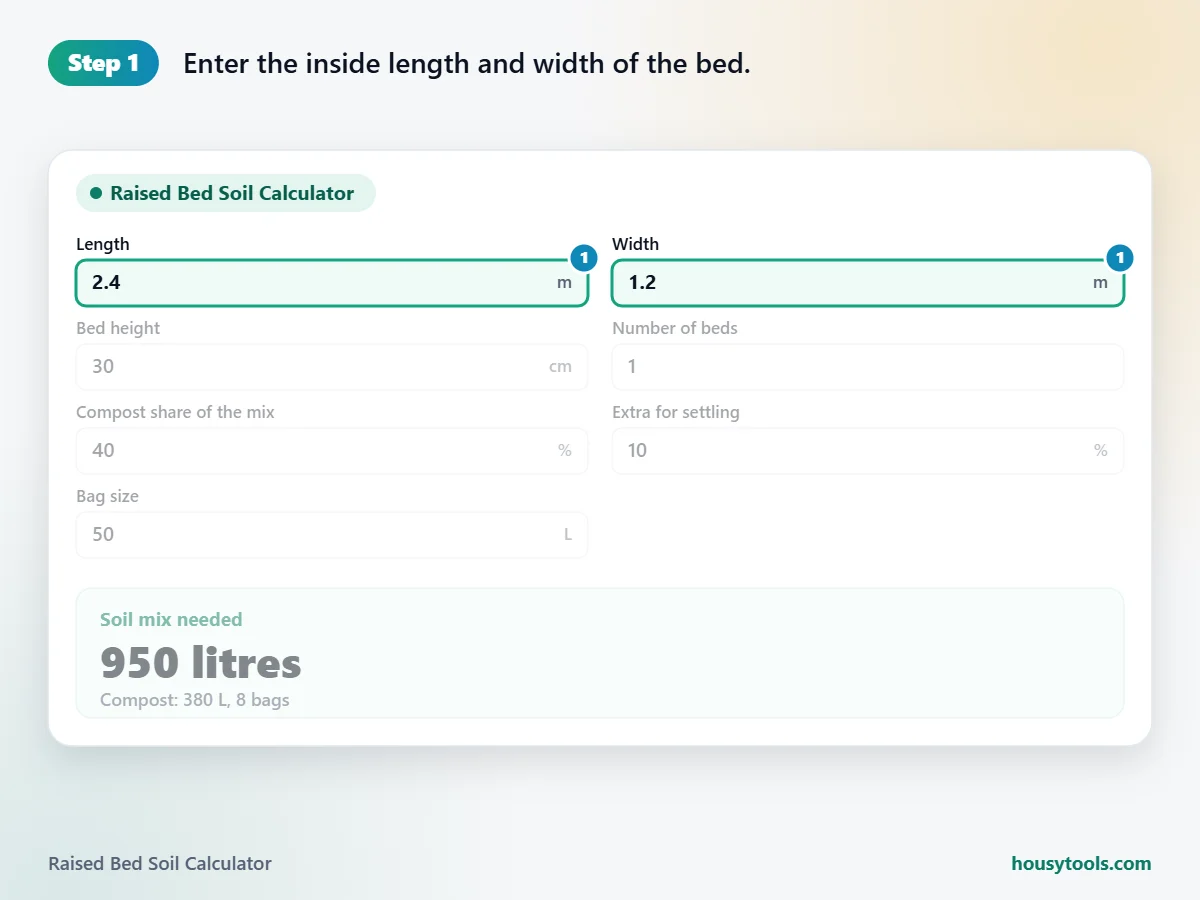
- Enter the inside length and width of the bed.
- Enter the bed height and how many beds you are filling.
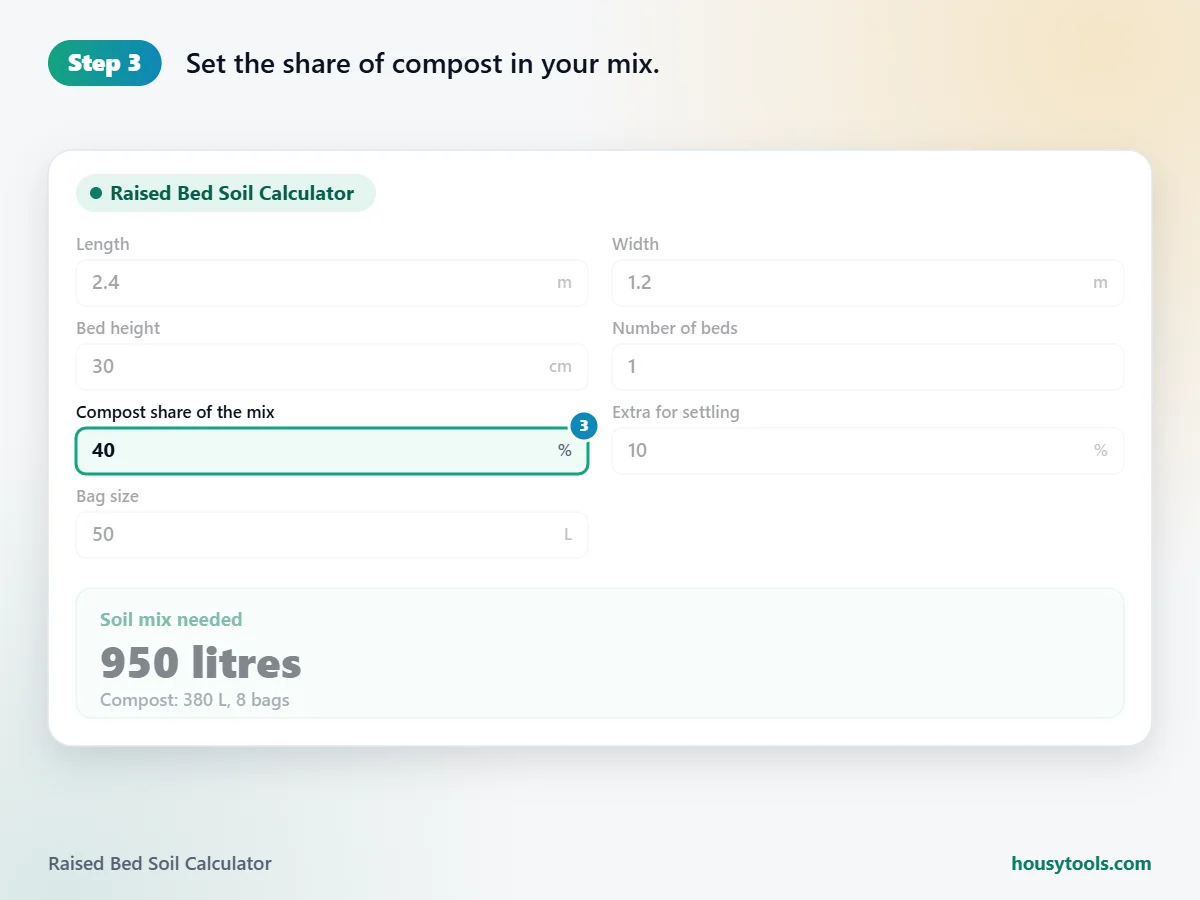
- Set the share of compost in your mix.
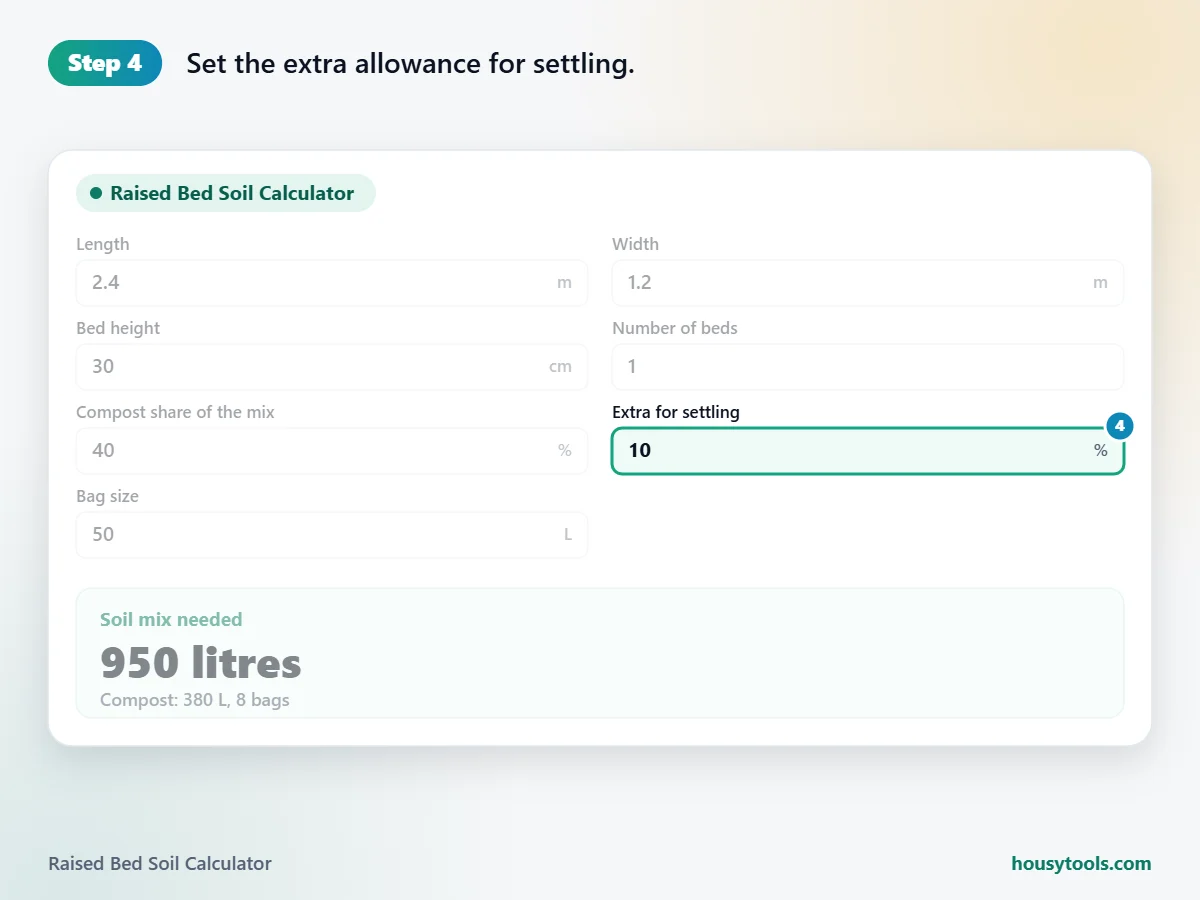
- Set the extra allowance for settling.
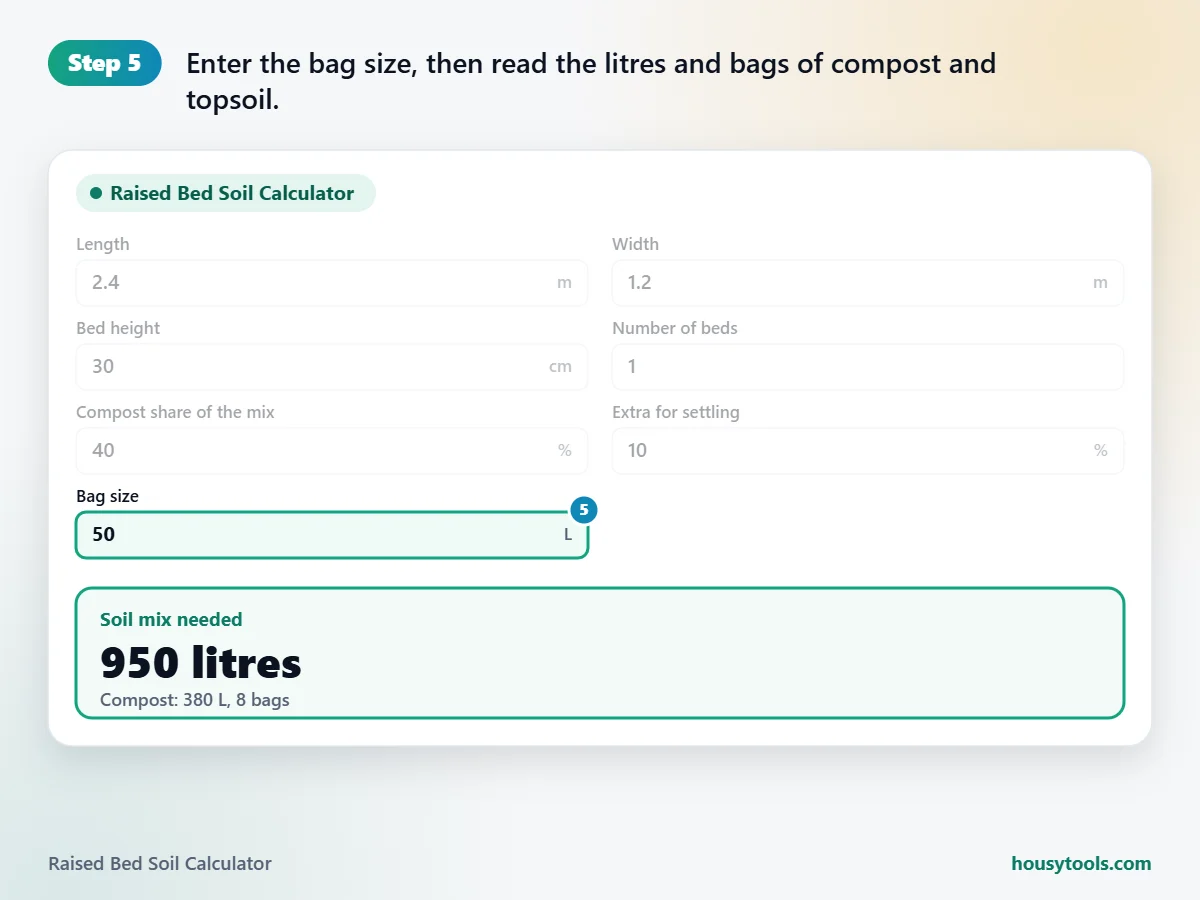
- Enter the bag size, then read the litres and bags of compost and topsoil.

How Much Soil Does a Raised Bed Need?
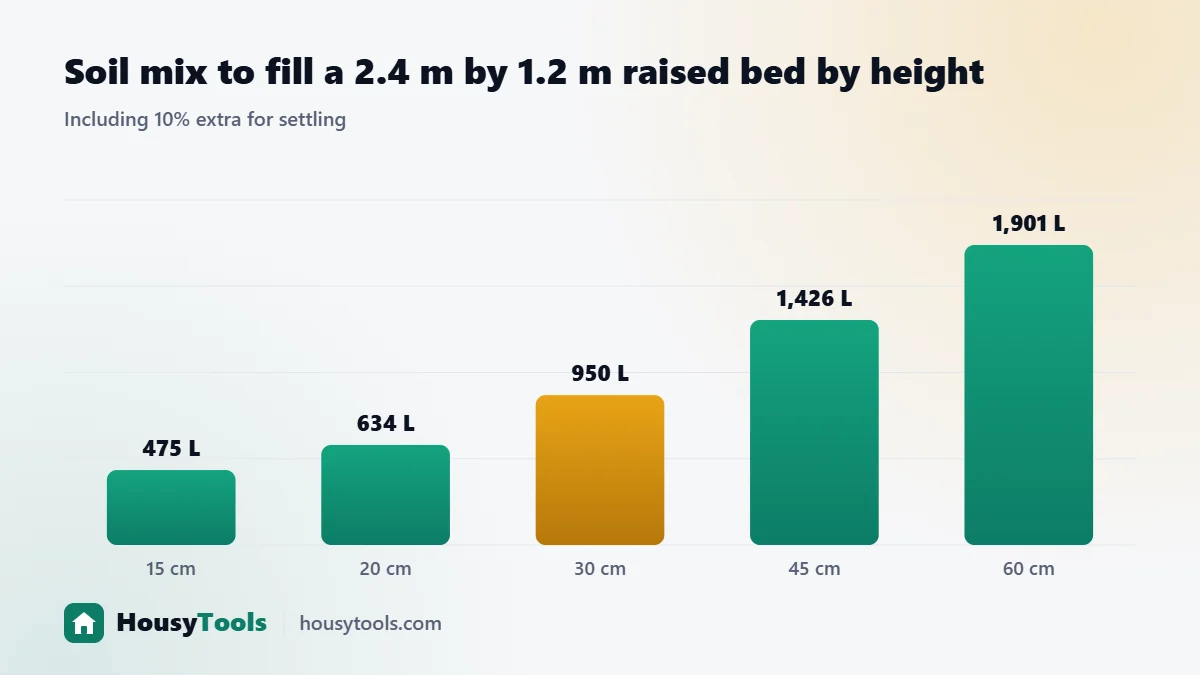
A raised bed holds far more soil than most people expect: a common 2.4 m by 1.2 m bed takes about 950 litres at 30 cm high and nearly 1,900 litres at 60 cm.
| Bed height | Soil mix with 10% settling | Compost at 40% | Topsoil at 60% |
|---|---|---|---|
| 15 cm | 475 L | 190 L | 285 L |
| 20 cm | 634 L | 253 L | 380 L |
| 30 cm | 950 L | 380 L | 570 L |
| 45 cm | 1,426 L | 570 L | 855 L |
| 60 cm | 1,901 L | 760 L | 1,140 L |
Tall beds are easier on the back but expensive to fill entirely with bought soil. Many growers put coarse material such as turned turf or spare subsoil in the bottom of very deep beds and use the good mix only for the top 30 cm or so where most roots grow.
What Soil Mix Is Best for a Raised Bed?
A blend of good topsoil and well rotted compost suits most vegetables and flowers, and the split depends on what you grow and the quality of the topsoil.
The calculator uses 40% compost and 60% topsoil as an example. A richer mix with more compost suits hungry crops, while too much compost alone can shrink a lot as it breaks down. The RHS advice on raised beds covers building, filling and maintaining them. To top up beds in later years, the compost calculator works out a yearly layer.
How Do You Build the Bed Itself?
Raised beds are often built from timber boards or garden sleepers, and the garden sleeper calculator works out how many sleepers you need for each layer.
Keep beds narrow enough to reach the middle from either side, often about 1.2 m, so you never have to stand on the soil. Leave paths wide enough for a wheelbarrow between beds.
Worked Example: Three Vegetable Beds
Example: a family builds three raised beds, each 1.8 m by 0.9 m inside and 40 cm high, and wants a half and half mix of compost and topsoil sold in 60 litre bags.
- Volume: 1.8 x 0.9 x 0.4 = 0.648 m³ per bed, so 1.944 m³ for three
- With 10% settling: 2.138 m³, or 2,138 litres
- Compost: 1,069 litres, 18 bags of 60 L
- Topsoil: 1,069 litres, 18 bags of 60 L

Thirty six bags is a heavy job, so the family prices a bulk bag of topsoil and a bulk bag of compost instead. A practical tip: fill the beds in layers and water each layer as you go, so the settling happens before you plant rather than after.
Raised Bed Soil Calculator FAQs
How many bags of soil do I need for a raised bed?
A 2.4 m by 1.2 m bed 30 cm high needs about 950 litres with settling, which is 19 bags of 50 litres. Enter your own bed size for an exact answer.
How much soil is in a cubic metre?
One cubic metre is 1,000 litres, which fills 20 bags of 50 litres. A raised bed of 2.4 m by 1.2 m by 35 cm holds about 1 m³.
Should I fill a raised bed with compost only?
Pure compost can shrink a lot as it breaks down and may be too rich for some plants. A mix of topsoil and compost is more stable.
What do you put in the bottom of a deep raised bed?
Many growers use upturned turf, branches or spare soil in the bottom of very deep beds to save on bought soil, with good mix in the top 30 cm or so.
Why does raised bed soil sink?
Loose soil and compost settle as air spaces collapse and organic matter breaks down. Adding about 10% extra and topping up each year keeps the level up.
How deep should a raised bed be for vegetables?
Many vegetables grow well in 20 to 30 cm of good soil, especially if the ground beneath is dug. Deeper beds suit root crops and poorly drained sites.
Checked October 2026. Sources: RHS advice on raised beds.