
These free cleaning calculators help UK and European households mix cleaning solutions safely, dose laundry detergent correctly, load the washing machine properly, read wash care symbols, treat stains and estimate the cost of a cleaner.
Quick answer: Choose the tool for your task, enter the product strength, water volume or load size, and read the result with the working. Always follow the product label first: these calculators help you measure accurately, and they never suggest mixing bleach with ammonia, vinegar or other acidic cleaners.
How Do You Dilute Bleach Safely?
Add bleach to cold water, not water to bleach, in a well ventilated room, and never mix it with other cleaners, because bleach with acids or ammonia releases harmful gases. The HSE COSHH guidance covers safe handling of cleaning chemicals at work.
How Much Detergent Should You Use?
Dose detergent by water hardness and how dirty the load is, using the measure on the pack: soft water and lightly soiled clothes need less, hard water needs more. Using too much leaves residue in clothes and the machine, and does not clean better.
How Full Should a Washing Machine Be?
Fill a cotton load to about 80 percent of the drum capacity, leaving a hand width of space at the top, because the capacity on the label is the maximum dry weight of cotton. Delicates and wool programmes take much smaller loads.
If your machine shows an error after a wash, see the Samsung 4C error guide, or work out running costs with the electricity cost calculator.
Tips for Accurate Results With Our Cleaning Calculators
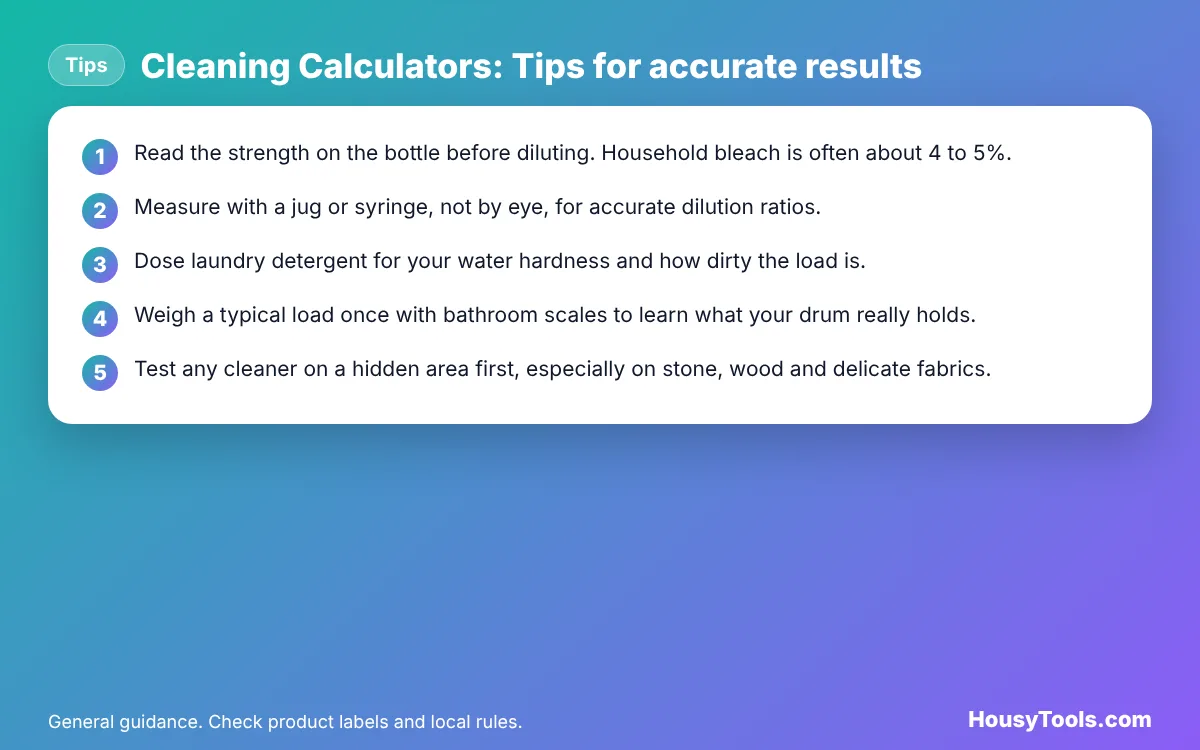
- Read the strength on the bottle before diluting. Household bleach is often about 4 to 5%.
- Measure with a jug or syringe, not by eye, for accurate dilution ratios.
- Dose laundry detergent for your water hardness and how dirty the load is.
- Weigh a typical load once with bathroom scales to learn what your drum really holds.
- Test any cleaner on a hidden area first, especially on stone, wood and delicate fabrics.
Common Mistakes to Avoid
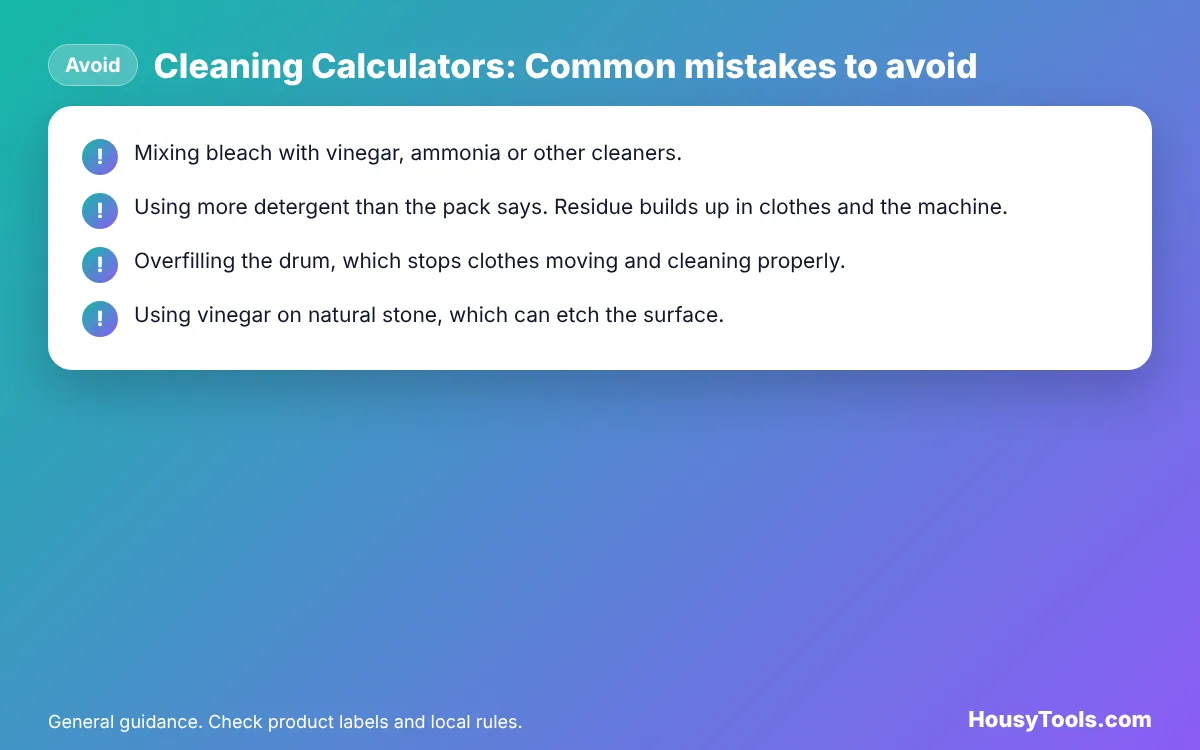
- Mixing bleach with vinegar, ammonia or other cleaners.
- Using more detergent than the pack says. Residue builds up in clothes and the machine.
- Overfilling the drum, which stops clothes moving and cleaning properly.
- Using vinegar on natural stone, which can etch the surface.
See the Calculators in Action
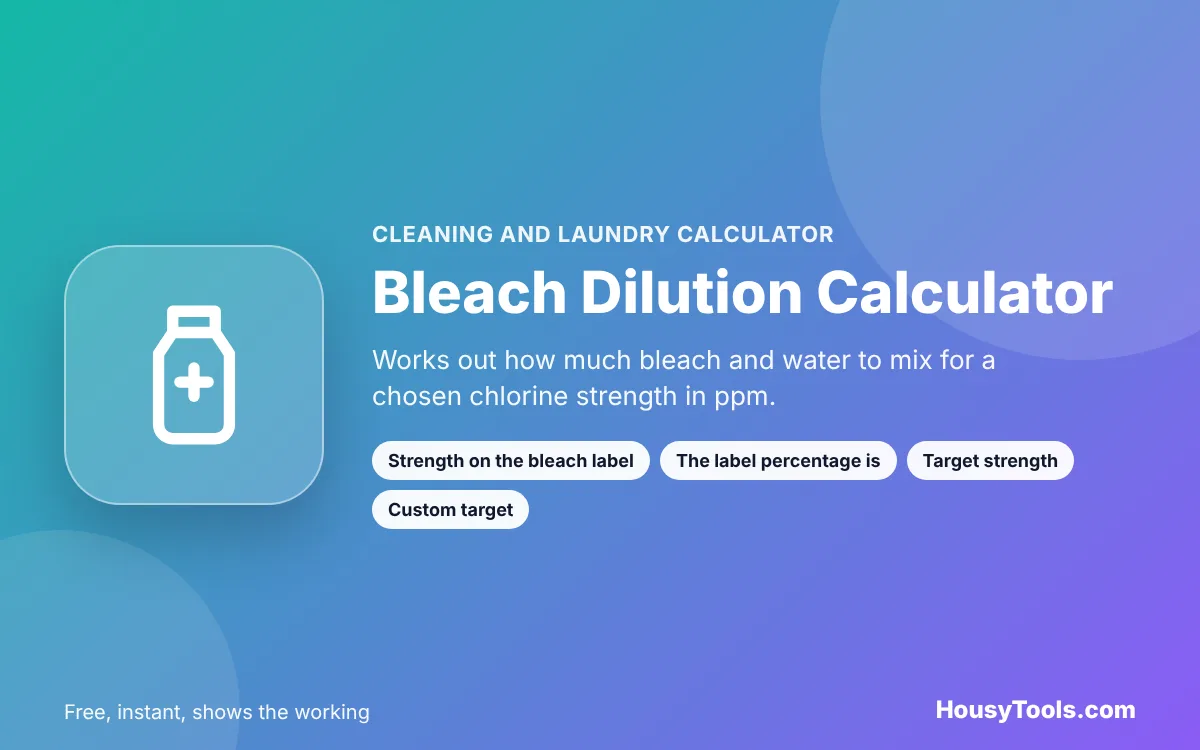
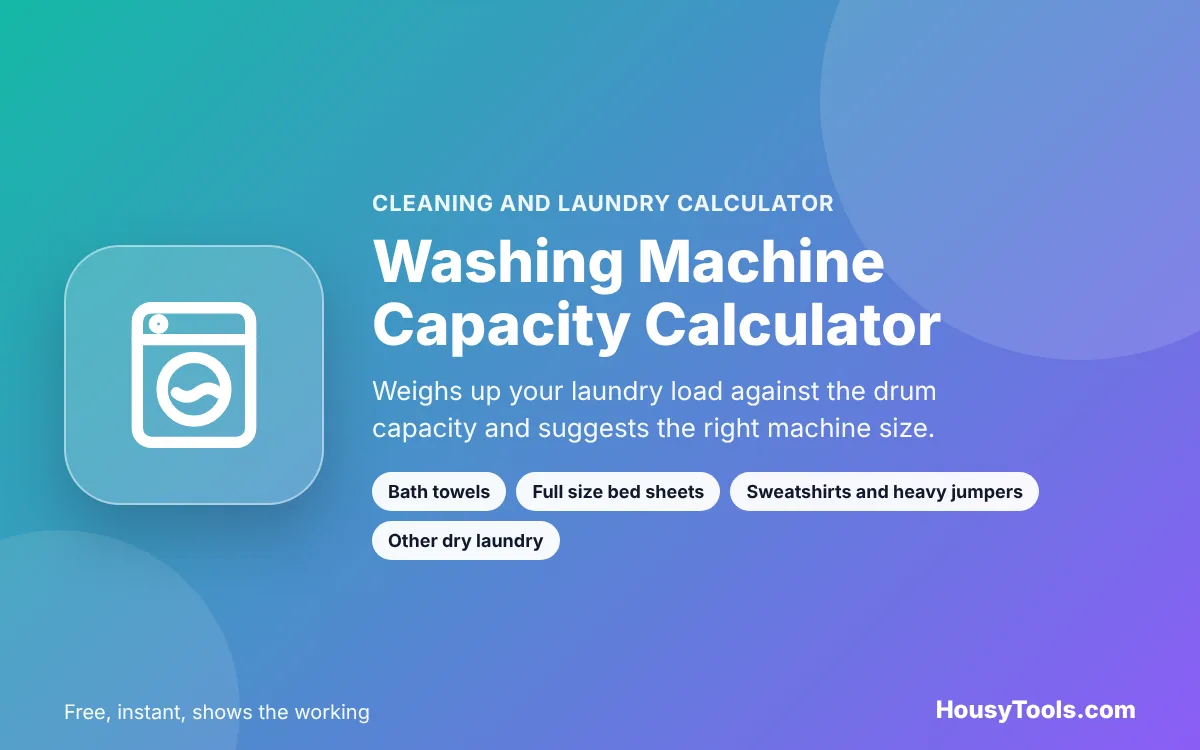
Each tool shows the formula, your result and a worked example. Here is what a few of these cleaning calculators look like.

Cleaning Calculator FAQs
Can I mix bleach and vinegar?
No. Mixing bleach with vinegar or any acid releases chlorine gas, which can damage your lungs. Use one product, rinse the surface with water, and only then use a different cleaner if needed.
What does a 1:10 dilution ratio mean?
A 1:10 ratio usually means 1 part concentrate to 10 parts water, making 11 parts in total. Some labels mean 1 part in 10 in total, so the dilution calculator lets you choose which reading your product uses.
How much does a house cleaner cost?
Hourly rates vary by region and by whether you hire through an agency or directly. The cleaner cost calculator uses editable example rates, and reminds you that anyone you employ directly must be paid at least the National Living Wage.