
Show the formula and working
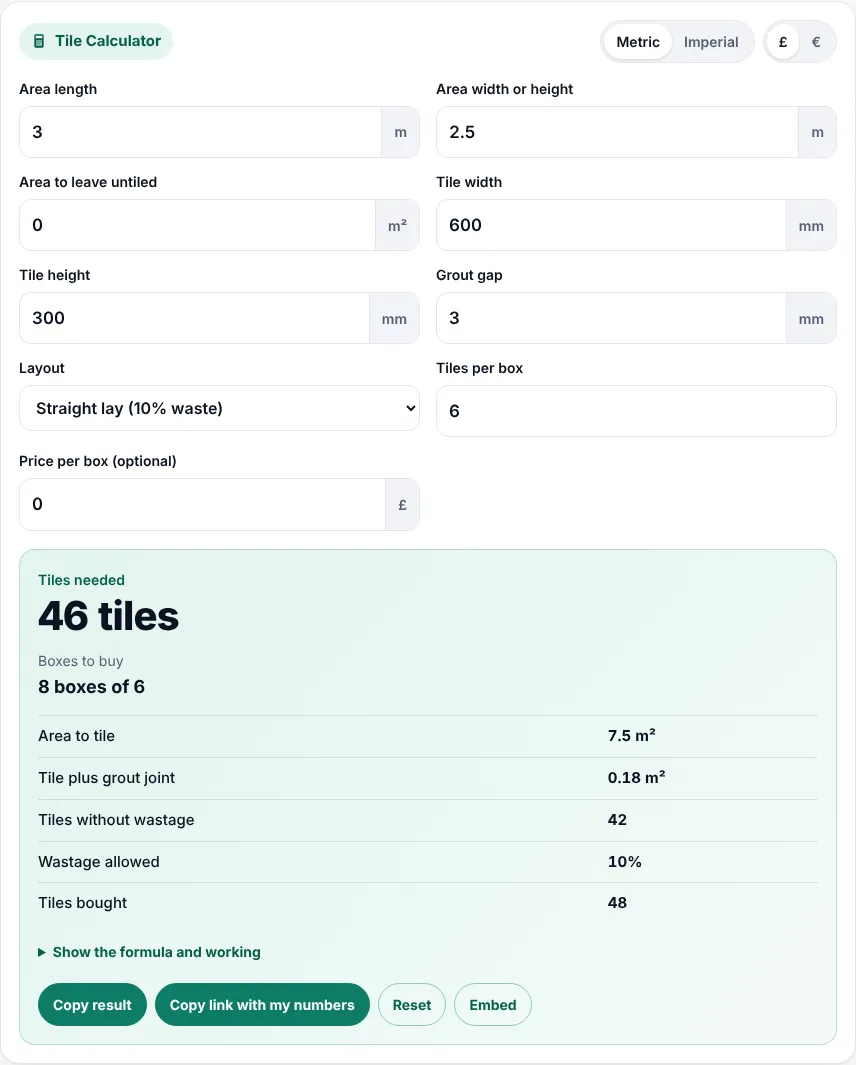
This tile calculator works out how many tiles and boxes you need for a floor or wall, for homeowners and DIY tilers in the UK and Europe. It includes the grout joint in the tile size, adds wastage for your layout, and rounds up to whole boxes, with an optional cost. Enter sizes in metres and millimetres, or switch to feet and inches.
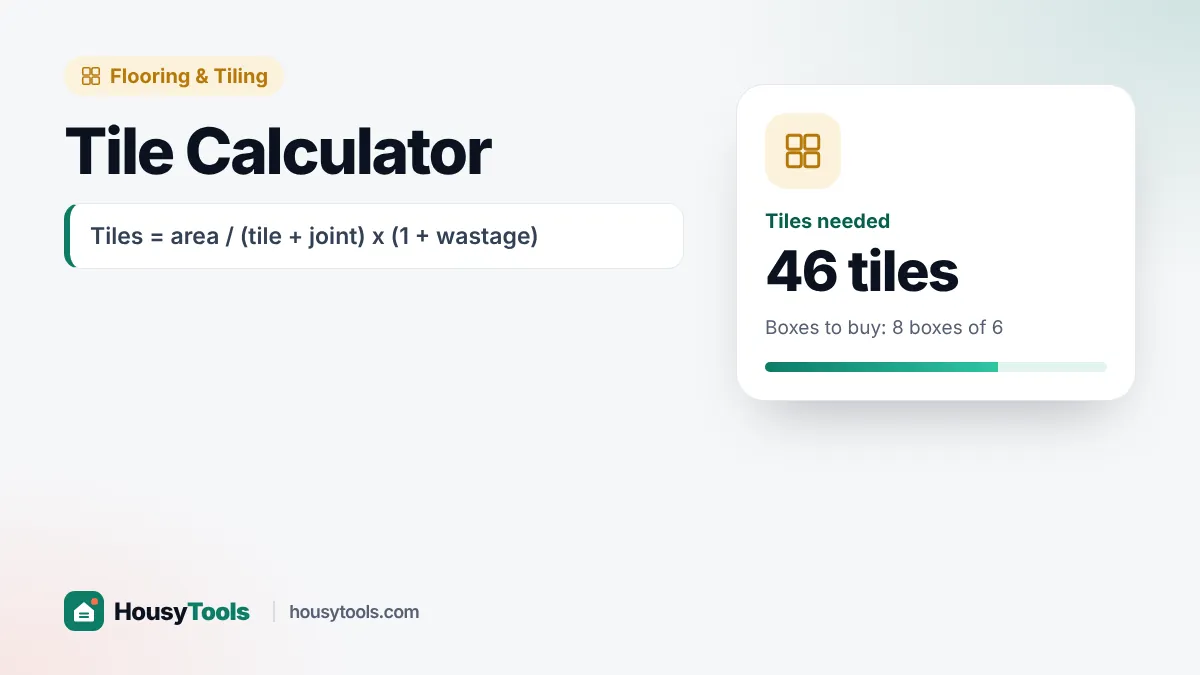
Quick answer: divide the area to tile by the area of one tile plus its grout joint, add wastage for the layout, then round up to whole boxes. The tile calculator shows a 2.4 m by 1.8 m floor in 600 by 300 mm tiles, brick bond, needs 27 tiles, which is 5 boxes of 6.
What Is a Tile Calculator?
A tile calculator is a tool that converts the size of a floor or wall into the number of tiles and boxes needed, after allowing for grout joints and cutting waste.
The method has four steps. First, area equals length times width, minus any part you will not tile. Second, the area of one tile is its width plus the joint, times its height plus the joint. Third, tiles equal area divided by tile area, times one plus the wastage percentage, rounded up. Finally, boxes equal tiles divided by tiles per box, rounded up.
Adding the joint matters more than people expect. With small tiles and wide joints, the grout lines take up a real share of the surface, so ignoring them overstates the tiles you need. The Wikipedia article on grout explains what fills those joints.
How Do You Use the Tile Calculator?
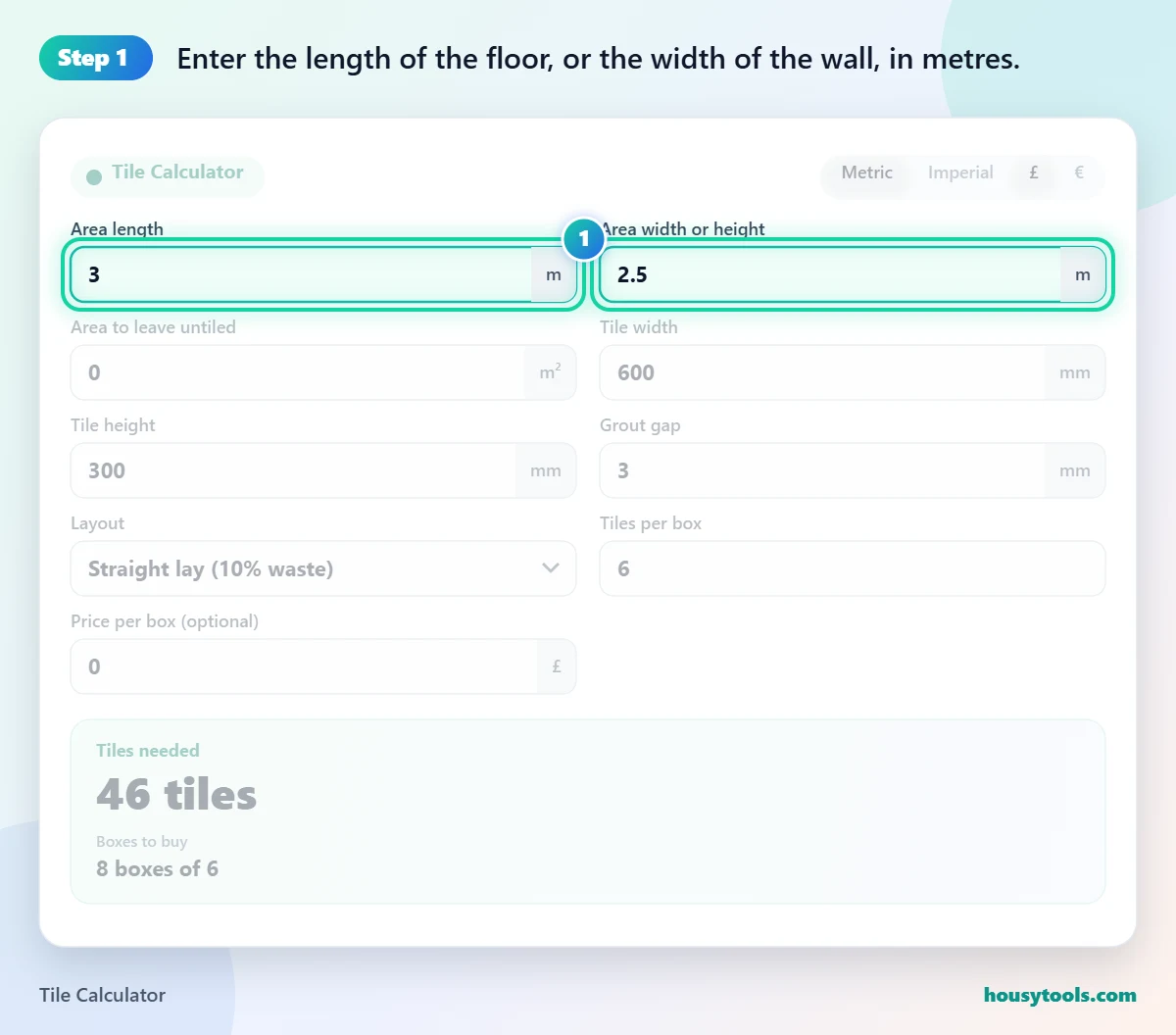
- Enter the length of the floor, or the width of the wall, in metres.
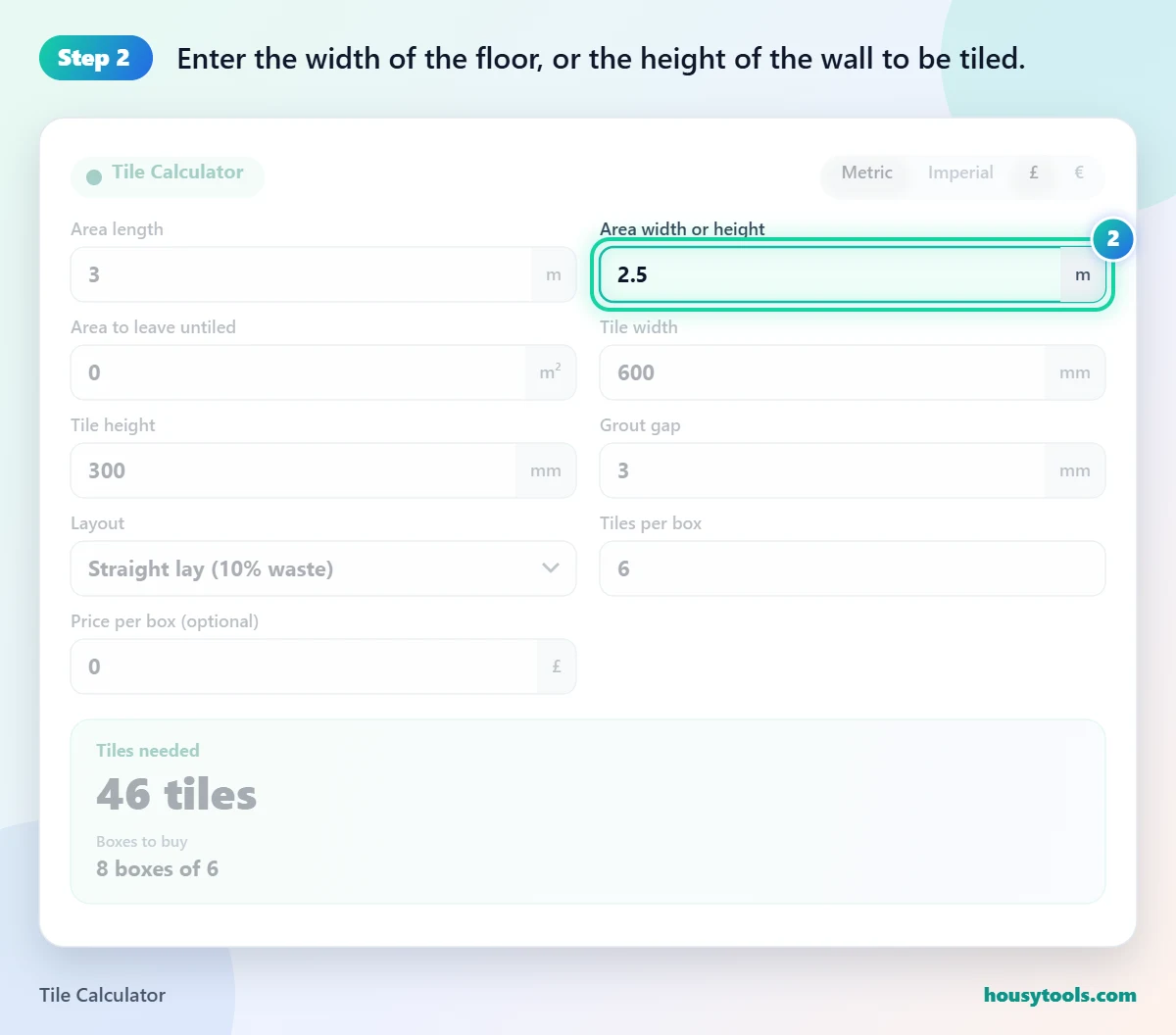
- Enter the width of the floor, or the height of the wall to be tiled.
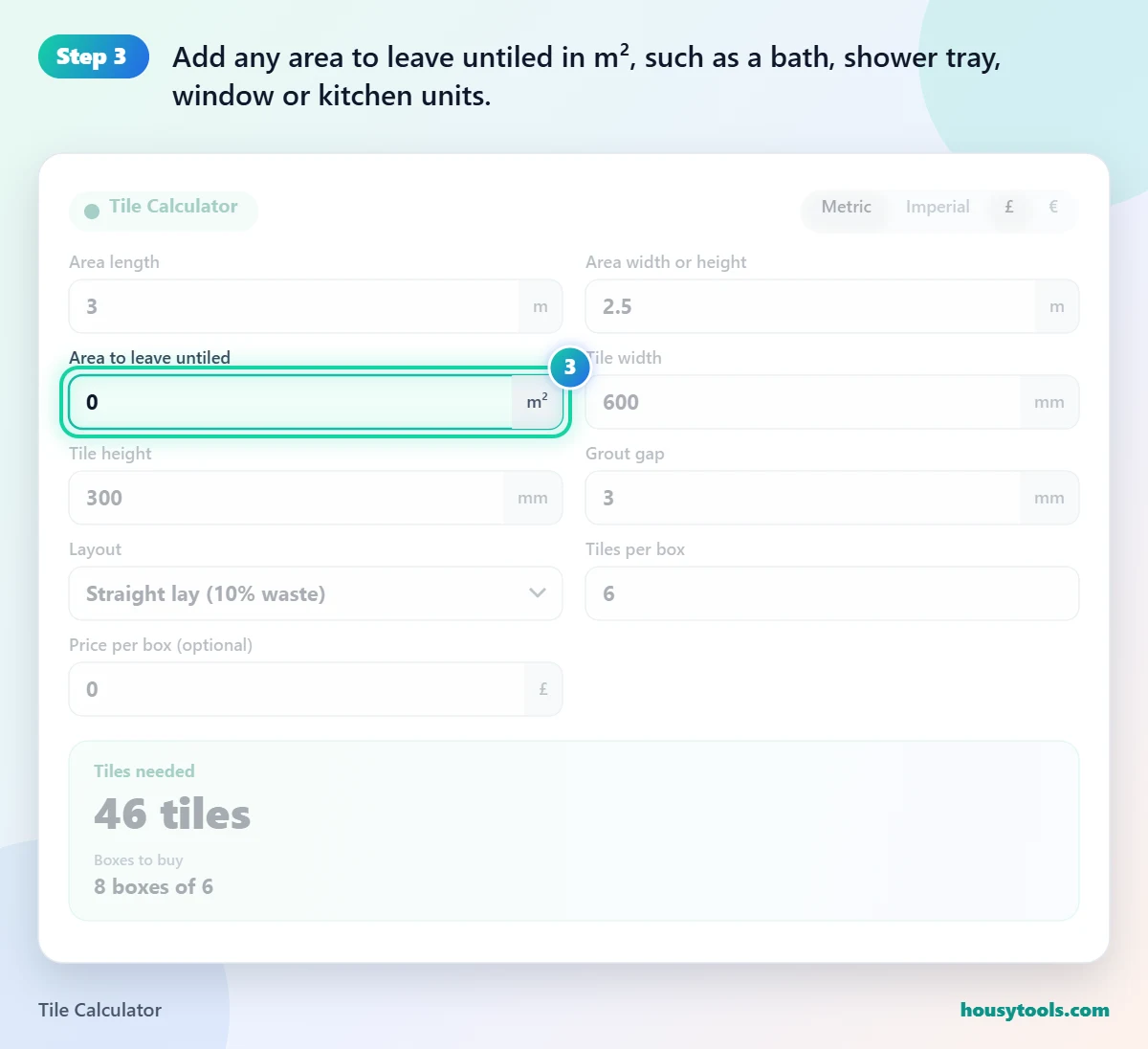
- Add any area to leave untiled in m², such as a bath, shower tray, window or kitchen units.
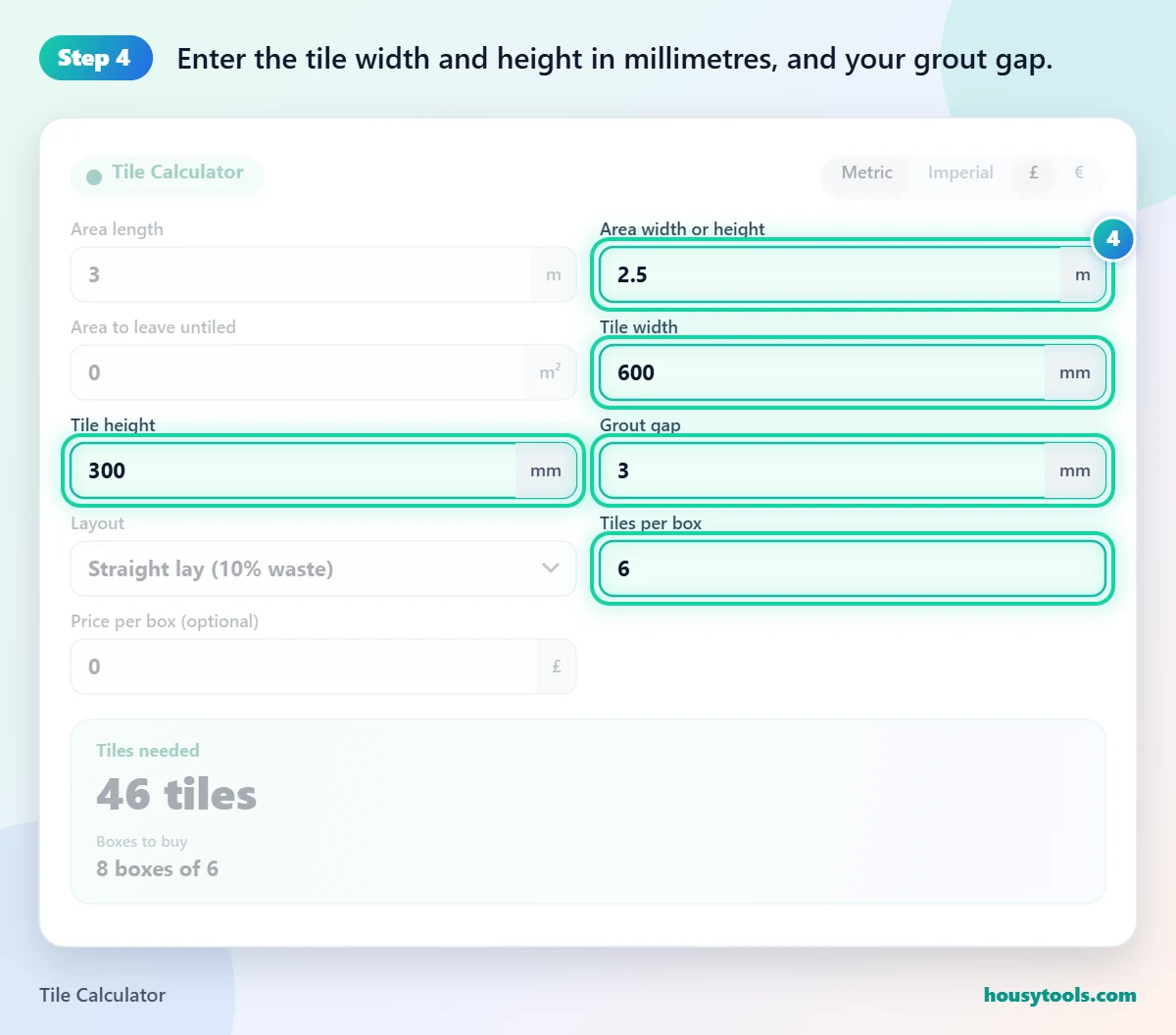
- Enter the tile width and height in millimetres, and your grout gap. The tile calculator starts at 600 by 300 mm with a 3 mm joint.
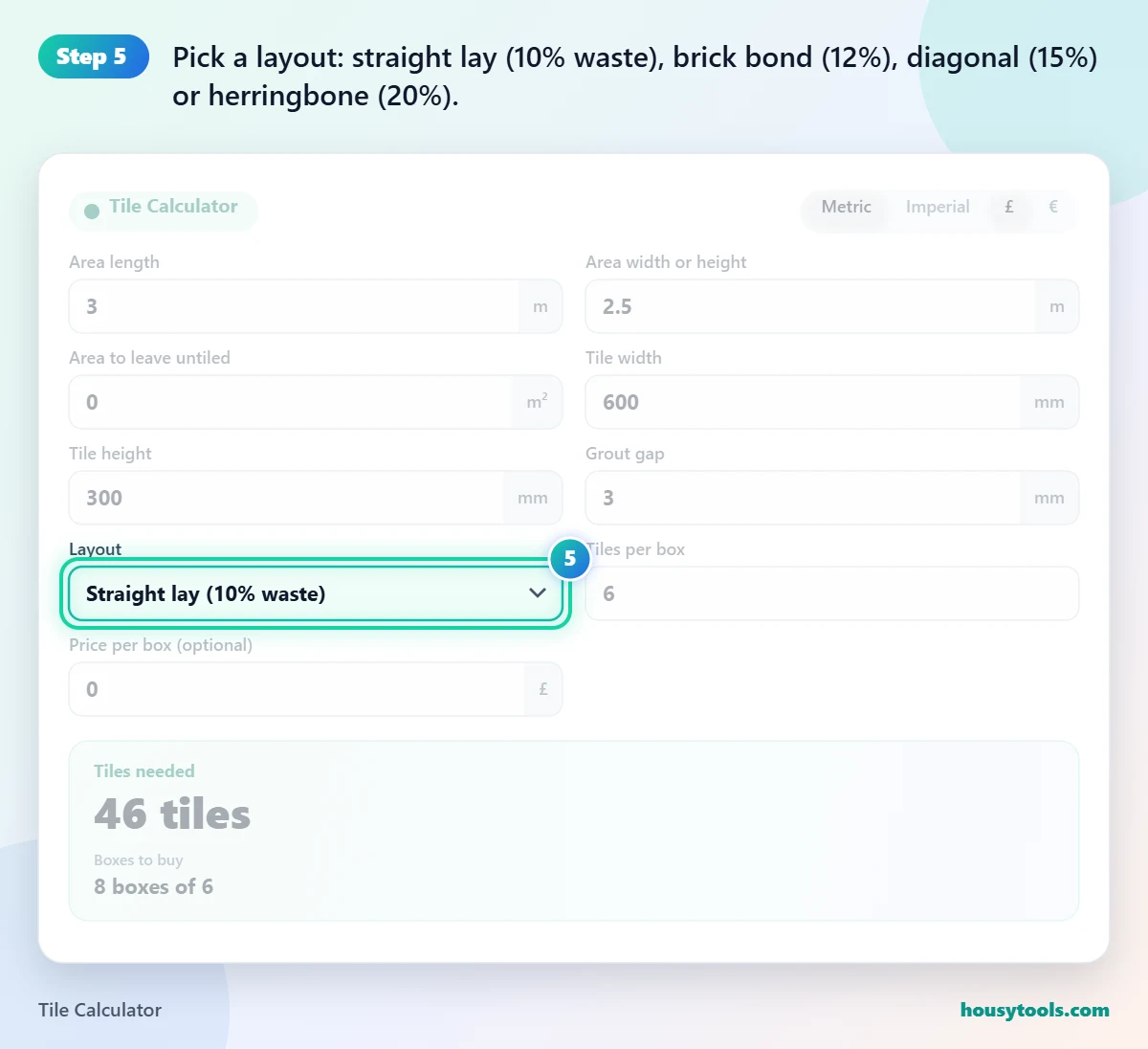
- Pick a layout: straight lay (10% waste), brick bond (12%), diagonal (15%) or herringbone (20%).
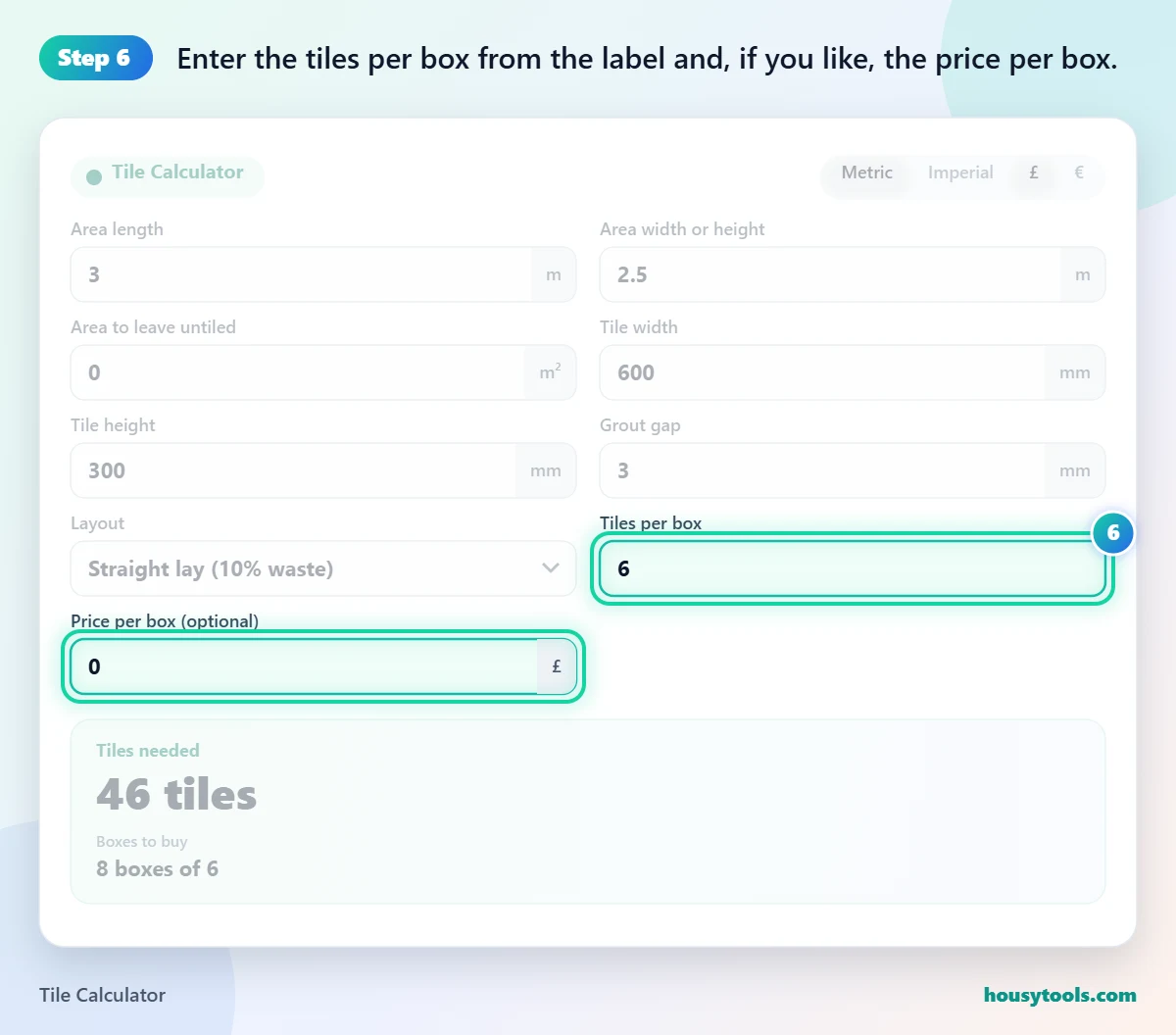
- Enter the tiles per box from the label and, if you like, the price per box.
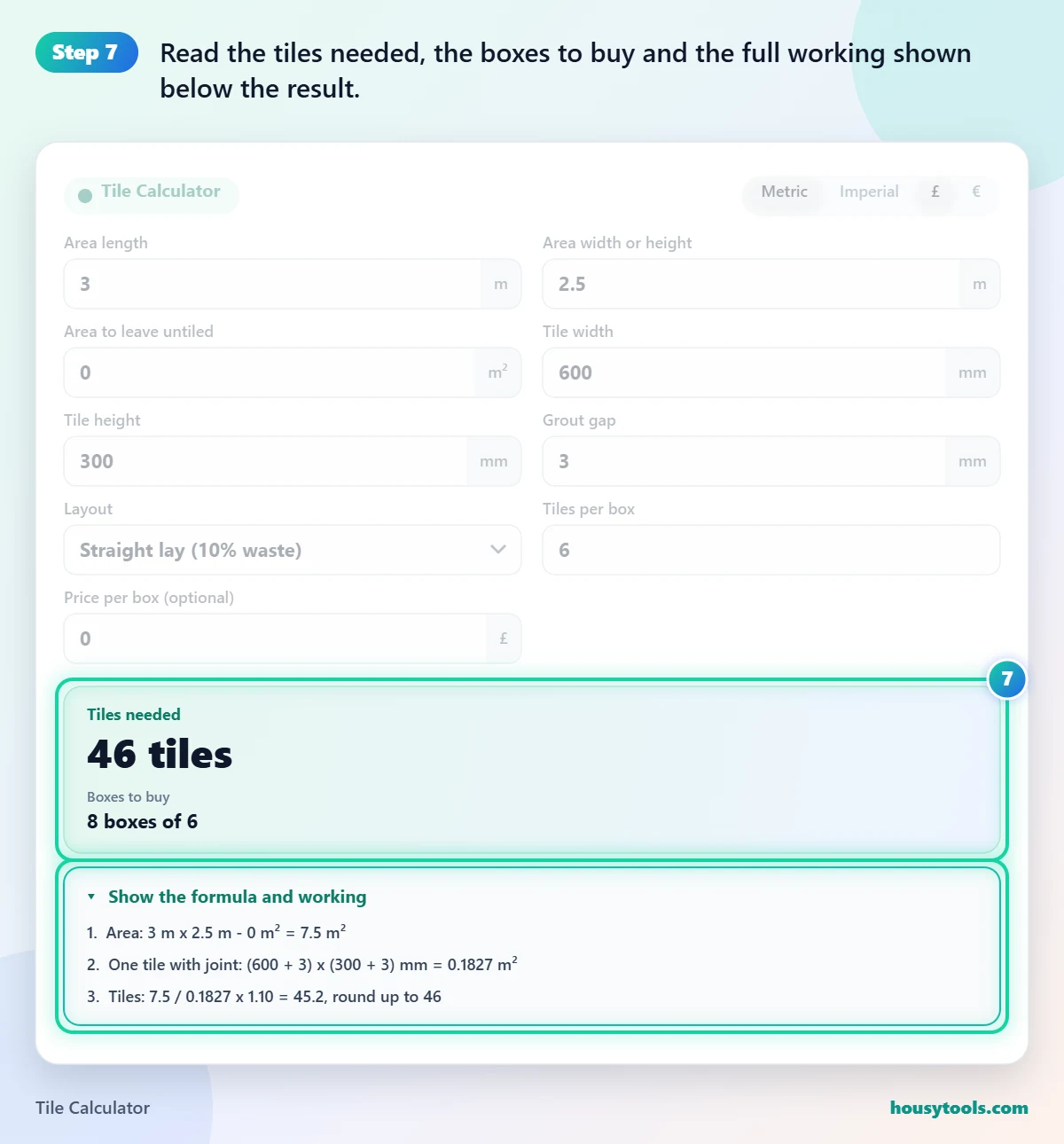
- Read the tiles needed, the boxes to buy and the full working shown below the result.
How Many Tiles Do I Need per Square Metre?
Divide 1 m² by the area of one tile including its joint: a 600 by 300 mm tile with a 3 mm joint covers 0.1827 m², so you need 5.47 tiles per m² before wastage.
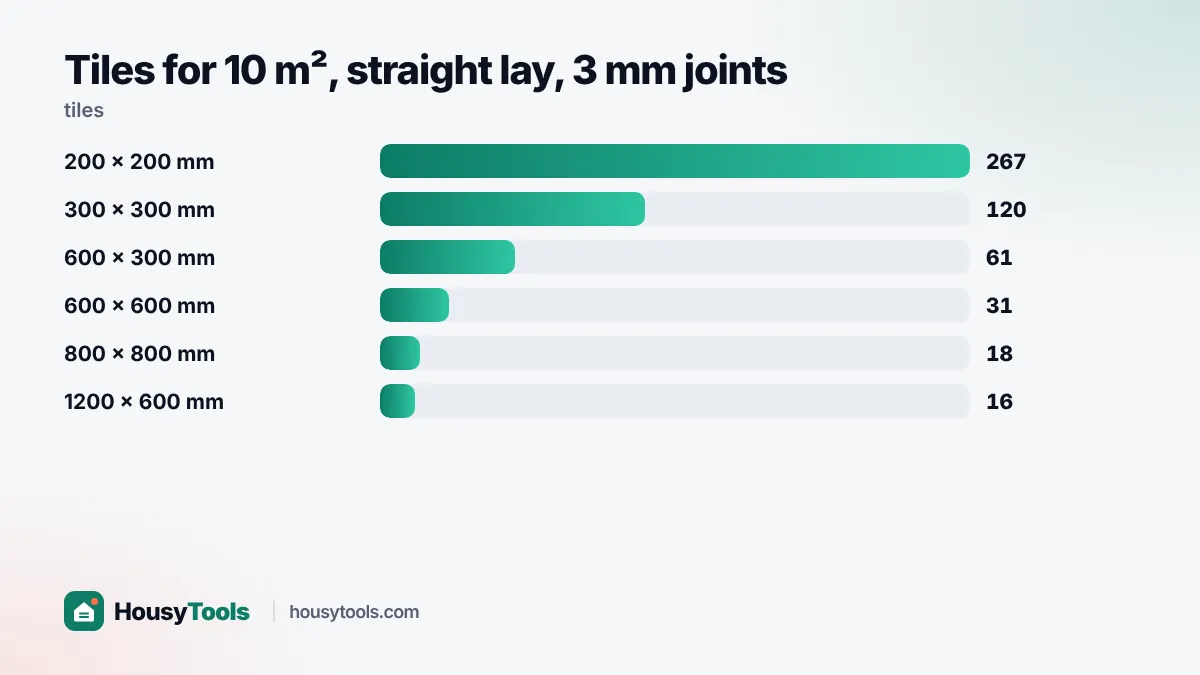
Bigger tiles mean far fewer pieces but not always less waste. Large format tiles leave bigger offcuts at the edges, and a single breakage costs more. Small tiles and mosaics need many more pieces but waste less at the cuts. The table gives tiles per m² for common sizes, worked out with the tile calculator using 3 mm joints.
Tile Calculator Reference Table: Tiles per m² by Size
| Tile size | Tiles per m² (3 mm joint) | Tiles for 10 m², straight lay |
|---|---|---|
| 100 x 100 mm | 94.26 | 1,037 |
| 200 x 200 mm | 24.27 | 267 |
| 300 x 300 mm | 10.89 | 120 |
| 600 x 300 mm | 5.47 | 61 |
| 600 x 600 mm | 2.75 | 31 |
| 800 x 800 mm | 1.55 | 18 |
| 1200 x 600 mm | 1.38 | 16 |
How Much Extra Tile Should You Buy for Wastage?
Allow about 10% extra for a straight lay, and more for patterns: the tile calculator uses 12% for brick bond, 15% for diagonal and 20% for herringbone, which is in line with common UK retailer guidance.
Patterns waste more because more tiles are cut at the edges, and the offcuts are often the wrong shape to reuse. A diagonal layout cuts every edge tile at an angle. Herringbone cuts both ends of many tiles. Rooms with lots of corners, pipes or a boxed in soil stack also waste more than a plain rectangle, so step up a layout if your room is awkward.
Rounding up to whole boxes often adds a little extra on top of the wastage. In a small room this can be several tiles, so compare the tiles needed with the tiles bought in the results before you add more. If the gap is large, a smaller box size or loose tiles from the shop may save money.
Keep a few spare tiles after the job. Tiles are made in batches, and a replacement bought years later may not match the shade or size exactly.
How Do You Measure a Wall or Floor for Tiling?
Measure each rectangle to be tiled in metres to two decimal places, multiply length by height or width, and add the rectangles together; enter the total as a single length and width, or tile each area separately.
- Floors: measure wall to wall at the widest point, including under any appliance that will be removed.
- Walls: measure the width of each wall and the height you want to tile, for example to the ceiling or to 1.2 m.
- Window reveals: add the reveal depth times its length for each side and the sill.
- Splashbacks: measure the width between units and the height from worktop to wall cupboards.
- Untiled areas: subtract the footprint of the bath, shower tray or fitted units with the untiled area box.
Once you know the tiled area, use the grout calculator and the tile adhesive calculator to finish your shopping list.
Worked Example: Emma Tiles a 2.4 m by 1.8 m Bathroom Floor
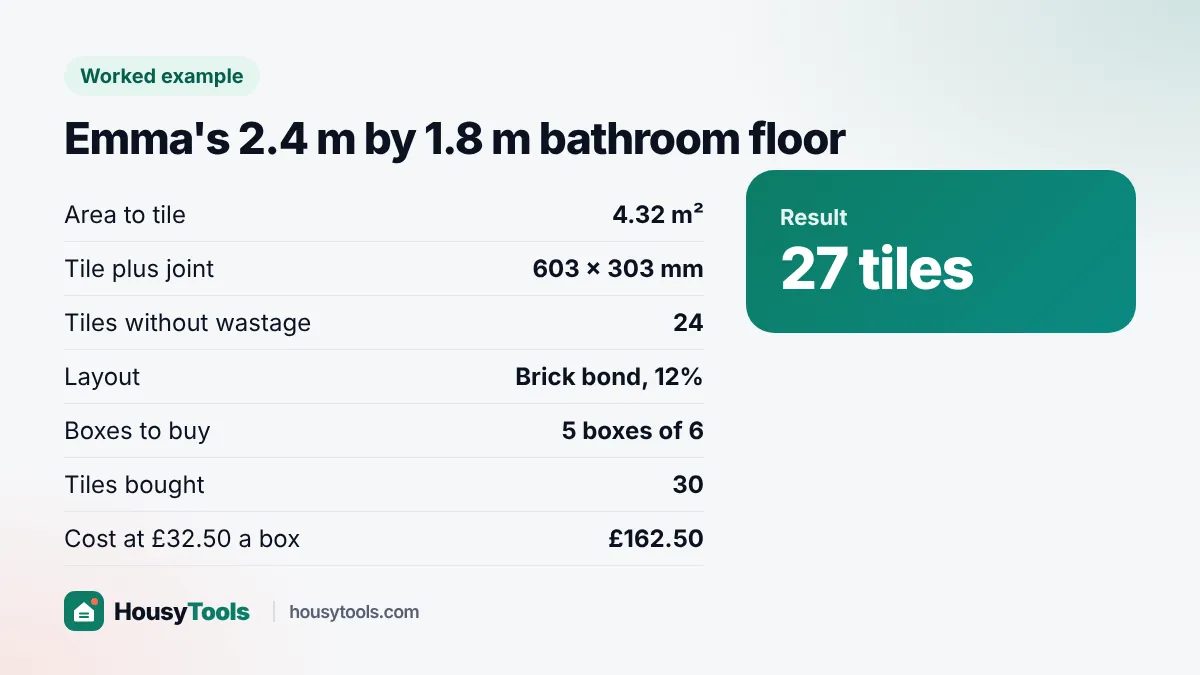
Emma in Cardiff is tiling her bathroom floor, which measures 2.4 m by 1.8 m. She has chosen 600 by 300 mm porcelain tiles laid in a brick bond, with a 3 mm joint. They come 6 to a box at £32.50 a box. She enters these figures into the tile calculator.
- Area: 2.4 m x 1.8 m = 4.32 m²
- One tile with joint: (600 + 3) x (300 + 3) mm = 0.1827 m²
- Tiles: 4.32 / 0.1827 x 1.12 = 26.5, rounded up to 27
- Boxes: 27 tiles / 6 per box = 5 boxes, so 30 tiles bought
- Cost: 5 x £32.50 = £162.50
Emma ends up with three spare tiles, which she keeps for future repairs. Because the old floor is uneven, she also checks the self levelling compound calculator before ordering.
What Should You Know Before Buying and Cutting Tiles?
Buy every box from the same batch, check the shade code on each box before you start, and open several boxes to mix the tiles as you lay them.
- Large format tiles need a flat floor and are heavy to handle, so plan for two people.
- Check whether the price is per box or per m² before comparing shops.
- Order a box more than the tile calculator suggests if the tile is discontinued or made to order.
- Cutting tiles creates fine dust. The HSE explains that tiles contain silica, so use a wet cutter or a manual scorer, work in a ventilated space and wear a suitable dust mask.
The most common mistakes are measuring in the wrong units, forgetting window reveals and splashback returns, using the nominal tile size instead of the real size on the box, and choosing straight lay wastage for a herringbone or diagonal floor. Each one leaves you short, and a second order may come from a different batch. Run the tile calculator again whenever the design changes, for example if you switch from a stacked layout to brick bond.
Tile Calculator FAQs
How many tiles do I need for a 2 m by 2 m floor?
A 2 m by 2 m floor is 4 m². In 300 by 300 mm tiles with 3 mm joints that is about 44 tiles before wastage, or 48 after 10%. Use the tile calculator with your exact tile and box size.
Should I include the grout gap when calculating tiles?
Yes. Each tile covers its own size plus half a joint on every side, so the tile calculator adds the gap to the width and height. With small tiles and wide joints, leaving it out overestimates the number of tiles you need.
How much wastage should I allow for herringbone tiles?
This tool uses 20% for herringbone, because many tiles are cut at both ends and offcuts rarely fit elsewhere. Very small rooms or complex shapes may need more. Ask your supplier if a short box can be returned.
How do I calculate tiles for a wall with a window?
Measure the full wall width and tiled height, then enter the window area in the untiled area box. Add the reveals separately, as they are tiled too. The tile calculator then subtracts the window and includes the reveals.
How many spare tiles should I keep?
Keep a few spare tiles, ideally from the same batch, for future repairs. Shades and sizes can vary between production runs, so a replacement bought years later may not match. The wastage allowance usually leaves some spares.
Does the tile calculator work in feet and inches?
Yes. Switch to imperial to enter lengths in feet and tile sizes in inches. The tile calculator converts everything internally and shows the result in square feet, so you can use measurements taken with an older tape.
Checked October 2026. Sources: HSE Cancer and construction: silica, Wikipedia: Grout.