
Show the formula and working
This free stain remover finder tells you the right first step, the water temperature and the product to reach for when you spill something, for households in the UK, Ireland, Europe and anywhere else. Choose the stain, the fabric or surface and whether it is fresh, and it gives a step by step method for washable clothes, wool and silk, dry clean only items, carpets and upholstery.
Quick answer: A stain remover finder matches the treatment to the stain type. Blot, never rub, then use cold water for protein and tannin stains such as blood, wine and coffee, washing-up liquid for grease, and biological detergent for grass and sweat. Never use biological detergent on wool or silk.
What Is a Stain Remover Finder?
A stain remover finder is a tool that picks the safest effective treatment for a particular stain on a particular fabric, so you do not set the stain or damage the item.
The logic in plain words: every stain belongs to a family. Protein stains such as blood, sweat and egg set with heat, so they need cold water and often enzymes. Tannin stains such as wine, tea and coffee rinse out best with cold water and detergent. Grease and oil need a detergent that breaks down fat and warmer water. Dyes, ink and wax each need their own approach. The fabric then limits what you can use: the care label’s laundry symbols set the highest safe temperature, and delicate fibres rule out some products.
How Do You Use the Stain Remover Finder?
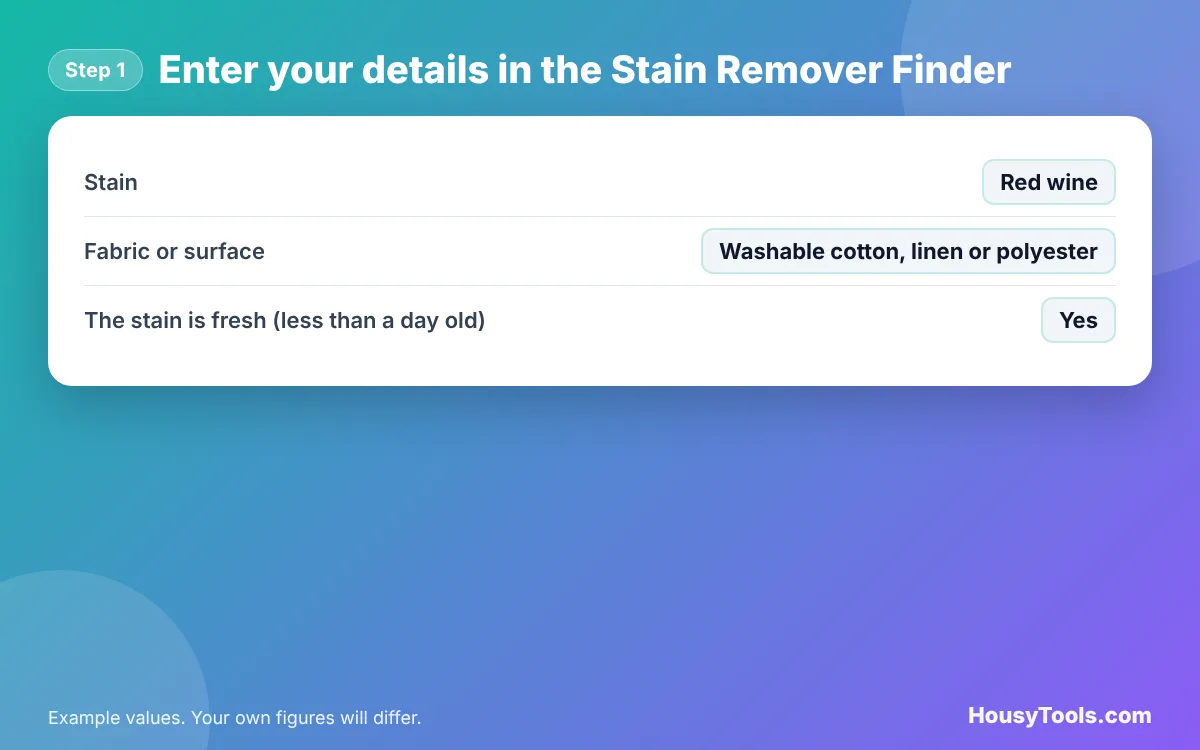
- Choose the Stain from the list.
- Choose the Fabric or surface, checking the care label first.
- Tick or untick The stain is fresh (less than a day old).
- Test the suggested product on a hidden area, such as an inside seam.
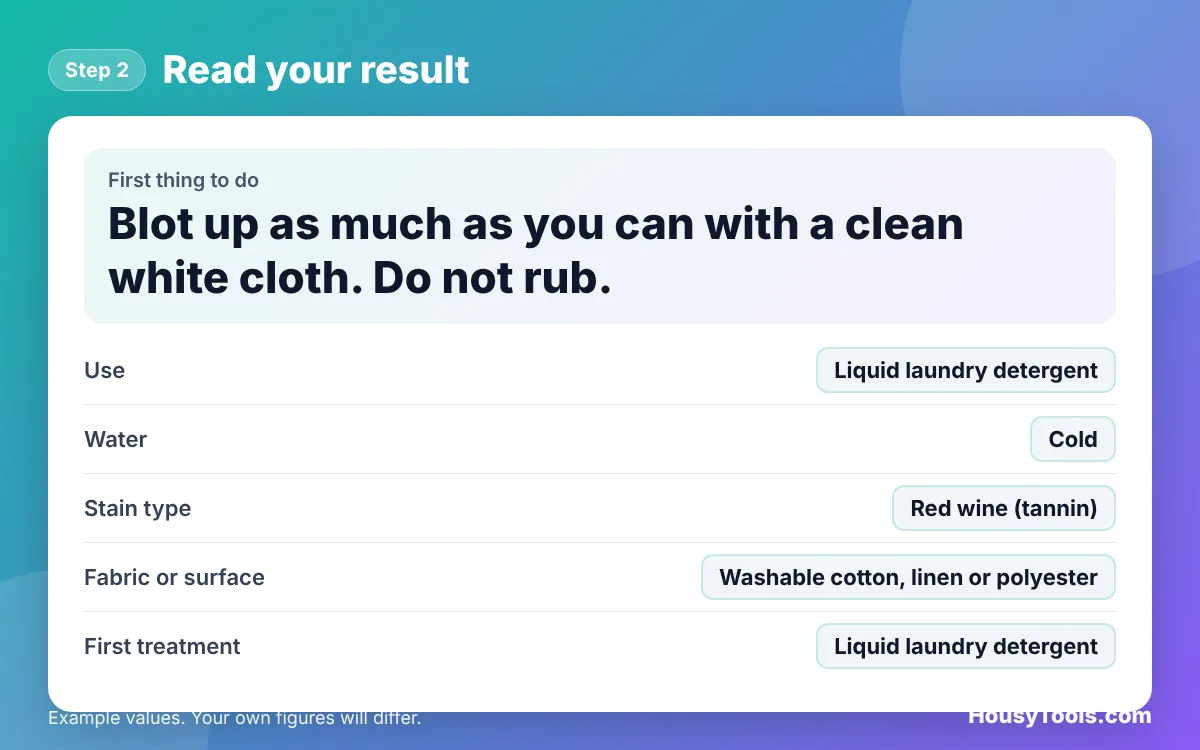
- Read the result and open “Show the formula and working” to see the full step by step method.

Should You Use Hot or Cold Water on Stains?
Start with cold water for most stains, because heat can cook protein stains such as blood and sweat into the fibres and set them permanently. Grease and oil are the main exception: once pre treated, they come out best at the warmest temperature the care label allows. Whatever the stain, avoid the tumble dryer and the iron until it has completely gone.
| Stain | Stain family | Water | First treatment on washable fabric |
|---|---|---|---|
| Red wine | Tannin | Cold | Blot, rinse from the back, liquid detergent |
| Coffee or tea | Tannin | Cold | Rinse from the back, liquid detergent |
| Blood | Protein | Cold only | Cold rinse, soak with biological detergent |
| Grease, oil or butter | Grease | Warm | Kitchen paper, then washing-up liquid |
| Grass | Protein and dye | Cool | Biological detergent |
| Mud | Soil | Cool | Let dry, brush off, liquid detergent |
| Tomato sauce or curry | Oil and dye | Cool | Scrape, rinse, washing-up liquid |
| Ballpoint ink | Ink | Cool | Dab with rubbing alcohol, then detergent |
| Sweat or deodorant | Protein and salts | Cool | Biological detergent |
| Candle wax | Wax | None at first | Ice, scrape, brown paper and warm iron |
What Is the Difference Between Biological and Non Bio Detergent?
Biological detergents contain enzymes that break down protein, starch and fat stains, which makes them better on blood, grass, sweat and food, especially at low temperatures. Non biological detergents have no enzymes. Because wool and silk are protein fibres, enzymes can damage them, so use a dedicated wool or silk detergent on those. Laundry detergent chemistry explains why.
How Do You Get Old or Dried Stains Out?
Old stains need longer soaking and usually more than one treatment: soak washable fabrics in cool water with the right product, up to overnight, then wash and check before drying. Stains that have been through a hot wash or dryer may be permanent. For carpets, repeat the treatment with blotting in between, and call a professional cleaner for large or stubborn marks. Dry clean only items should always go to a dry cleaner.
Which Stain Removers Should Never Be Mixed?
Never mix cleaning products, and in particular never mix bleach with ammonia, vinegar or other acids, because the mixtures give off toxic gases. Use one product at a time, rinse between them, and keep the room ventilated. Rubbing alcohol for ink is flammable, so use only a small amount, away from flames and heaters. The HSE guidance on hazardous substances explains why you should always read the label and safety information.
Worked Example: Fresh Red Wine on a Cotton Shirt
Example: red wine has just been spilled on a washable cotton shirt. These are the tool’s default choices: Red wine, Washable cotton, linen or polyester, and fresh.
- First: blot up as much as you can with a clean white cloth, without rubbing.
- Rinse with cold water from the back of the fabric to push the wine out.
- Work a little liquid laundry detergent into the mark and leave for 5 to 10 minutes.
- Wash at the warmest temperature the care label allows, and check the stain has gone before tumble drying.
Running stain treated items in full loads keeps costs down, as the washing machine running cost calculator shows, and air drying until you are sure the stain is gone avoids setting it, which also saves the cost in the tumble dryer running cost calculator.
Stain Remover Finder FAQs
What is the best way to remove a stain?
Act fast, blot rather than rub, and work from the back of the fabric so the stain is pushed out, not in. Then use the right product for the stain family and the coolest water that works, and check the care label before washing.
Does salt remove red wine stains?
Salt can soak up some liquid, but blotting with a cloth and rinsing with cold water does the same job without any risk of spreading the stain. Follow with liquid detergent and a normal wash.
How do I get blood out of clothes?
Rinse with cold water from the back straight away, then soak in cold water with a little biological detergent for at least 30 minutes. Never use hot water until the blood has gone, as heat sets it. Use a wool detergent instead on wool or silk.
How do I remove grease from clothes?
Absorb excess oil with kitchen paper, work a drop of washing-up liquid into the stain, leave it for 10 minutes, then wash at the warmest temperature the care label allows. Washing-up liquid is designed to break down fats.
Can I use stain remover on a carpet?
Use a remover made for carpets and suitable for the fibre, test it on a hidden spot first, and use as little liquid as possible. Blot dry with a clean towel. Too much water can soak the backing and underlay and cause more marks.
What should I do with a stain on dry clean only clothes?
Blot gently with a dry white cloth and take the item to a dry cleaner as soon as possible. Tell them what caused the stain. Home treatments with water or detergent can set the stain or damage the fabric.
Checked October 2026. Sources: Wikipedia, Laundry symbol, Wikipedia, Laundry detergent, HSE, COSHH. Always follow the care label and product label.