
These garden calculators work out how much topsoil, mulch, compost, turf, artificial grass, grass seed, lawn feed, raised bed soil, sleepers and pond liner you need, for gardens in the UK, Ireland and the rest of Europe. Each one is free, works on your phone, switches between metres and feet, and shows the formula and working so you can check the numbers before you order.
Quick answer: Garden calculators turn the size of a lawn, bed or pond into an order: cubic metres and bulk bags of topsoil, litres and bags of mulch or compost, rolls of turf, square metres of artificial grass, grams of seed and the exact liner size. Measure length and width in metres, add depth, and each tool does the rest.
Which Garden Calculator Do You Need?
Pick the calculator that matches the job you are planning this weekend.
- New lawn: the topsoil calculator, then either the turf calculator or the grass seed calculator.
- Low maintenance lawn: the artificial grass calculator.
- Borders and beds: the mulch calculator and the compost calculator.
- Growing vegetables: the raised bed soil calculator and the garden sleeper calculator.
- Lawn care: the lawn fertiliser calculator.
- Water features: the pond liner calculator.
How Do You Measure a Garden for Materials?
Measure the longest length and the widest width of the area in metres, then multiply them to get square metres; for odd shapes, split the area into rectangles and add them up.
Most garden materials are then a simple step from area: depth turns area into volume for soil, mulch and compost, a roll size turns it into turf, and a sowing rate turns it into grams of seed. A 30 m tape and a few canes to mark corners are usually all you need. Our square metre calculator helps with awkward shapes.
| Material | What you need to know | Typical unit sold |
|---|---|---|
| Topsoil | Area and depth | Bulk bags or tonnes |
| Mulch and bark | Area and depth | 50 to 90 litre bags |
| Compost | Area and layer depth | 40 to 75 litre bags |
| Turf | Area | Rolls, often 1 m² |
| Artificial grass | Length, width and roll width | Metres off 2 m or 4 m rolls |
| Grass seed | Area and sowing rate | Boxes in kg |
Why Do Garden Calculators Add Extra?
Loose materials settle and turf needs trimming, so ordering exactly the measured amount usually leaves you short; most of these tools add 5% to 10% that you can change.
Topsoil and raised bed mixes sink as they are firmed and watered, turf and artificial grass lose offcuts at curves and edges, and bags are always rounded up to whole bags. It is cheaper to order a little extra once than to pay a second delivery charge.
See the Calculators in Action
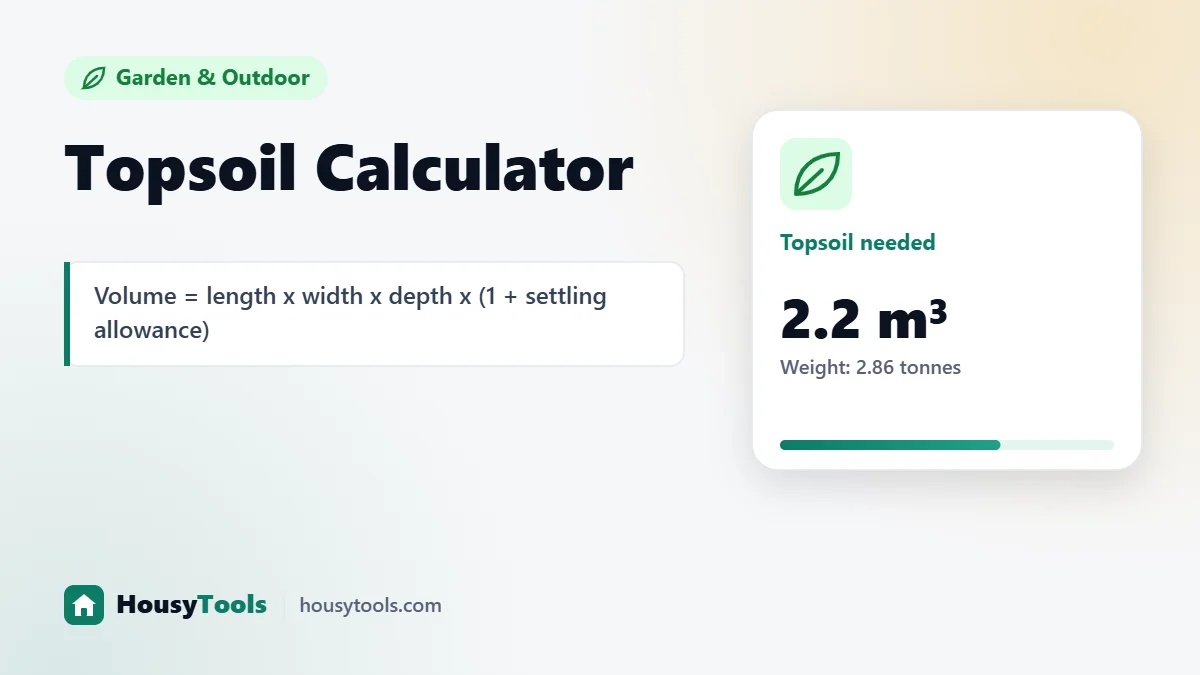
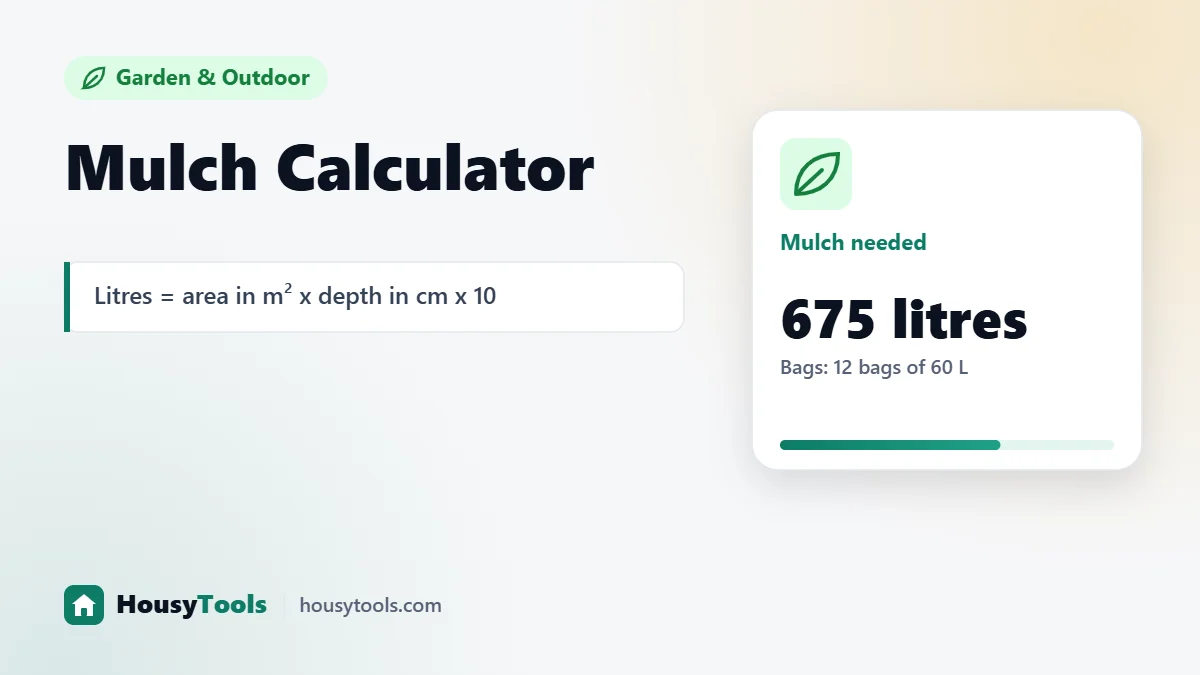
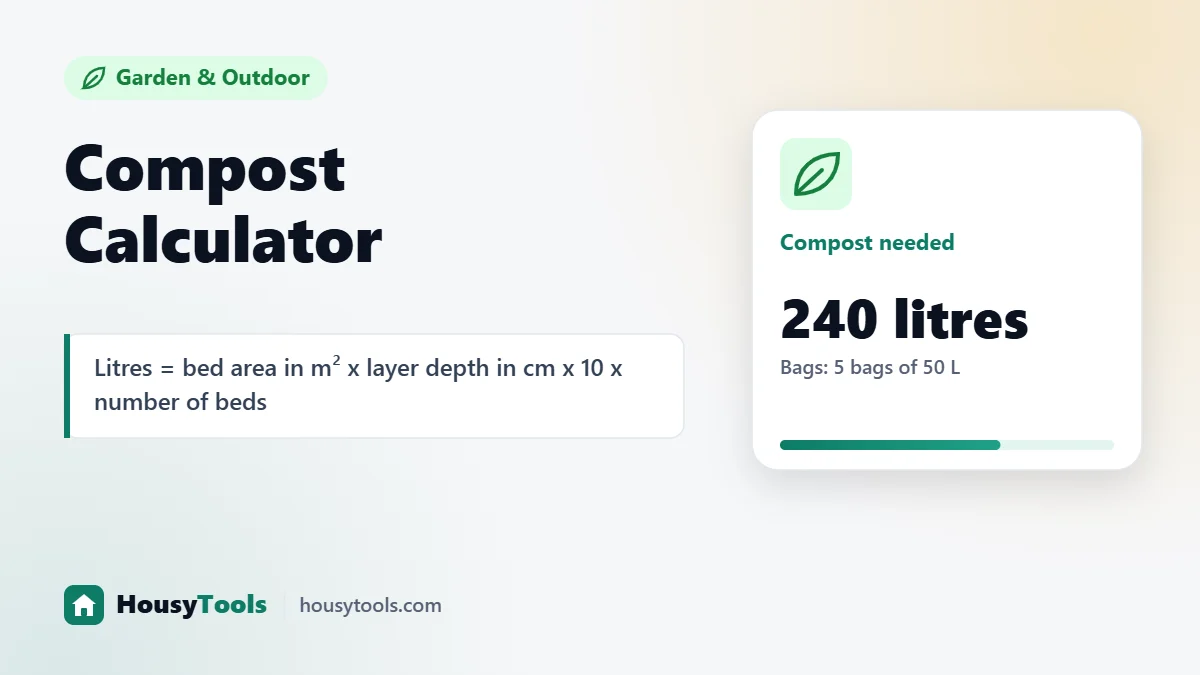
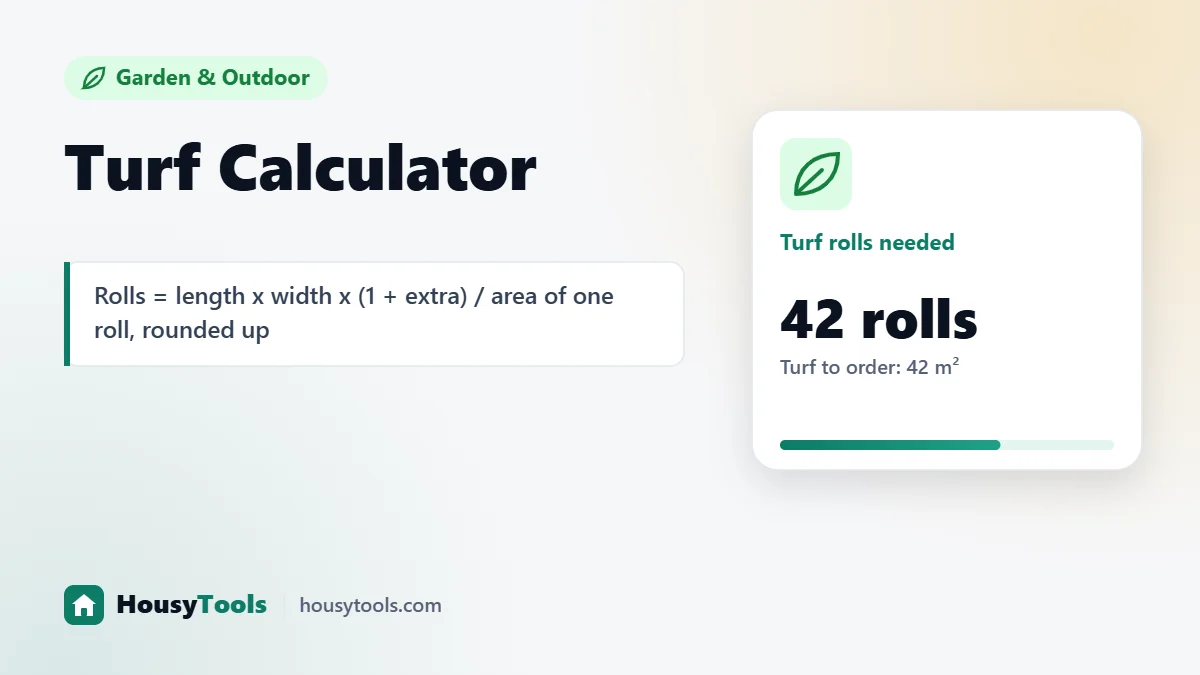
Each tool shows the formula, your result and a worked example. Here is what a few of these garden calculators look like.
For seasonal lawn and border care, the RHS lawn advice pages are a reliable place to check timings before you buy materials.
Garden Calculator FAQs
How much topsoil do I need for a new lawn?
A depth of about 10 to 15 cm is common for a new lawn. For a 5 m by 4 m lawn at 10 cm, with 10% extra for settling, you need about 2.2 m³. The topsoil calculator works it out for any size.
How deep should mulch be?
The RHS advises a layer of at least 5 cm and ideally 7.5 cm. Thinner layers do not suppress weeds well and break down quickly.
Is turf or seed cheaper for a new lawn?
Seed costs far less per square metre but takes weeks to establish. Turf gives an instant lawn but costs more. Compare both with the turf and grass seed calculators.
What size are artificial grass rolls?
Many are sold off 2 m and 4 m wide rolls, cut to the length you order. The artificial grass calculator finds the layout with the least waste.
Can I use these calculators in feet?
Yes. Each garden calculator has a metric and imperial switch, so you can enter feet and see results in square feet and cubic feet as well as metric units.
Checked October 2026. Sources: RHS advice on mulching, supplier product information for bag and roll sizes.