
Show the formula and working
This mulch calculator works out how much bark chip or other mulch you need to cover a bed or border, in litres, cubic metres and bags. Enter the length and width in metres or feet, choose the depth, and enter the bag size printed on the pack. It flags any depth below the 5 cm minimum the Royal Horticultural Society advises.
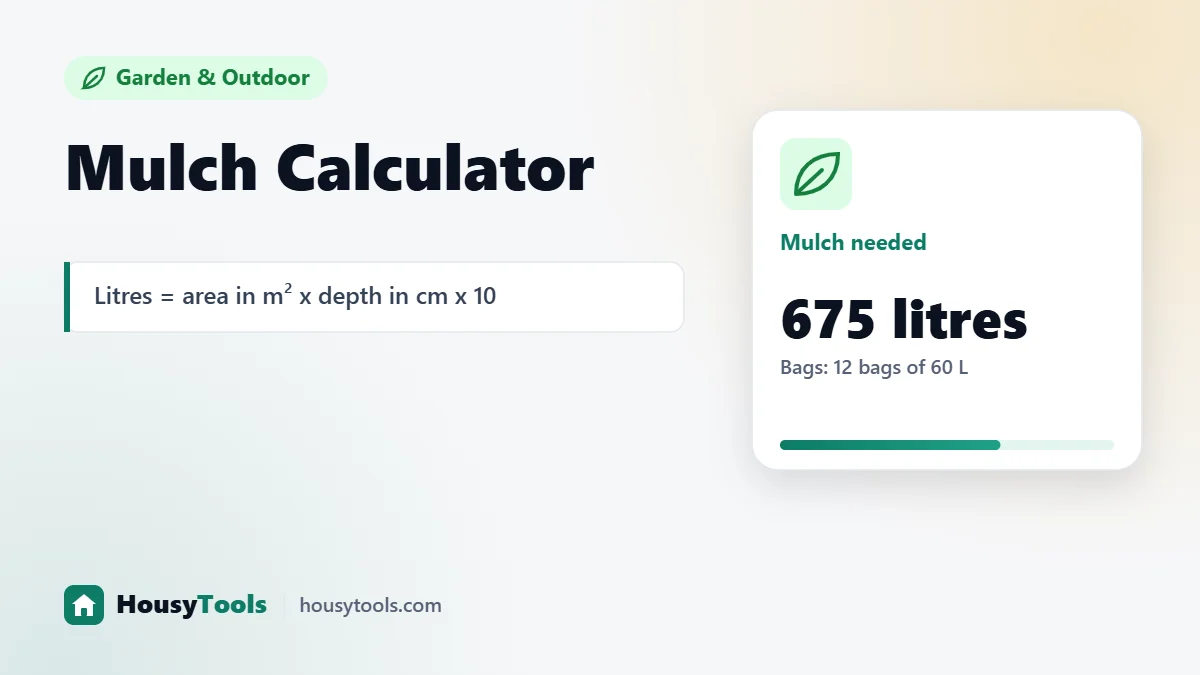
Quick answer: To work out how much mulch you need, multiply the area in square metres by the depth in centimetres, then by 10 to get litres. A 6 m by 1.5 m border is 9 m², so at the RHS ideal depth of 7.5 cm it needs 675 litres, which is 12 bags of 60 litres.
What Is a Mulch Calculator?
A mulch calculator is a tool that turns the size of a bed and the depth of mulch you want into the volume to buy and the number of bags.
The formula in plain words: area equals length times width. One square metre covered 1 cm deep holds 10 litres, so litres equal area in m² times depth in cm times 10. Divide by the bag size and round up to a whole bag. Divide litres by 1,000 for cubic metres, which is how loose bulk deliveries are usually priced.
How Do You Use the Mulch Calculator?
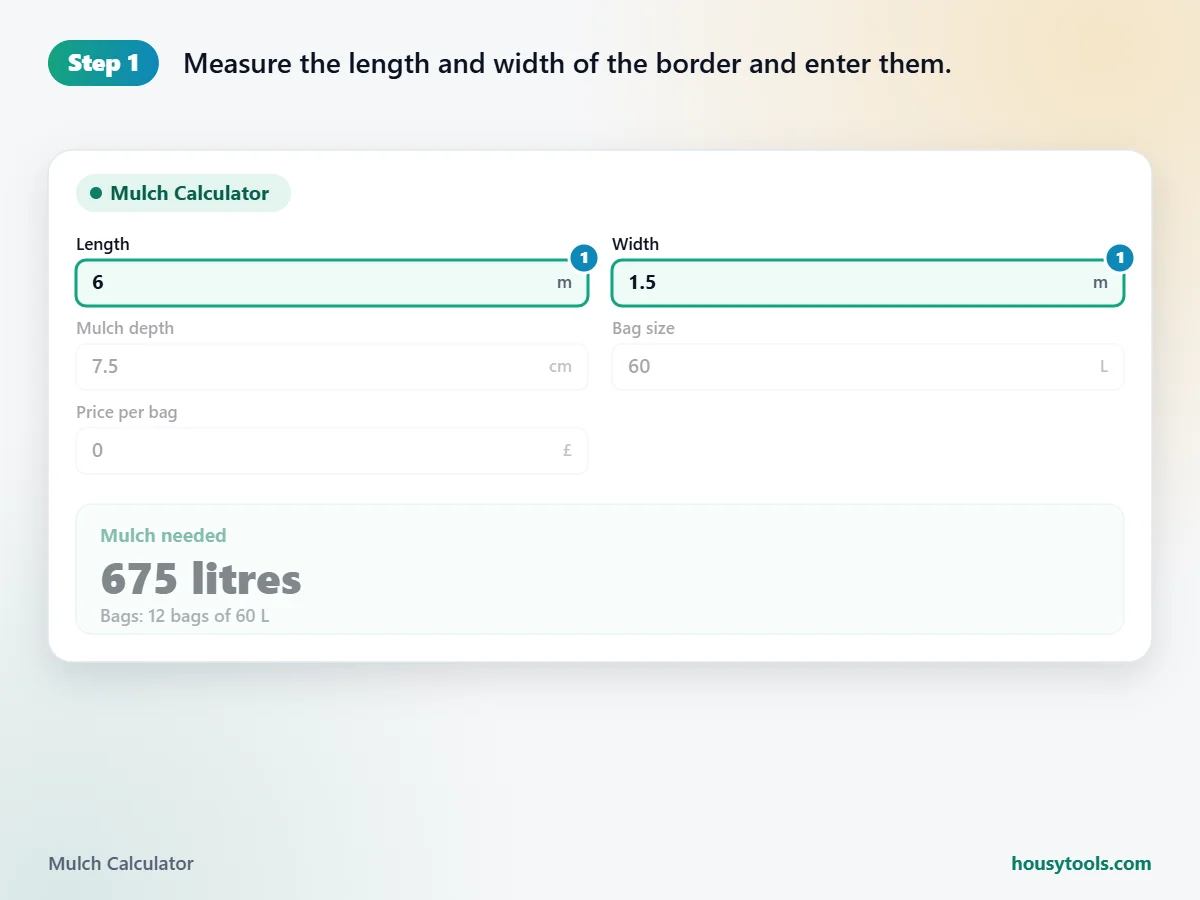
- Measure the length and width of the border and enter them.
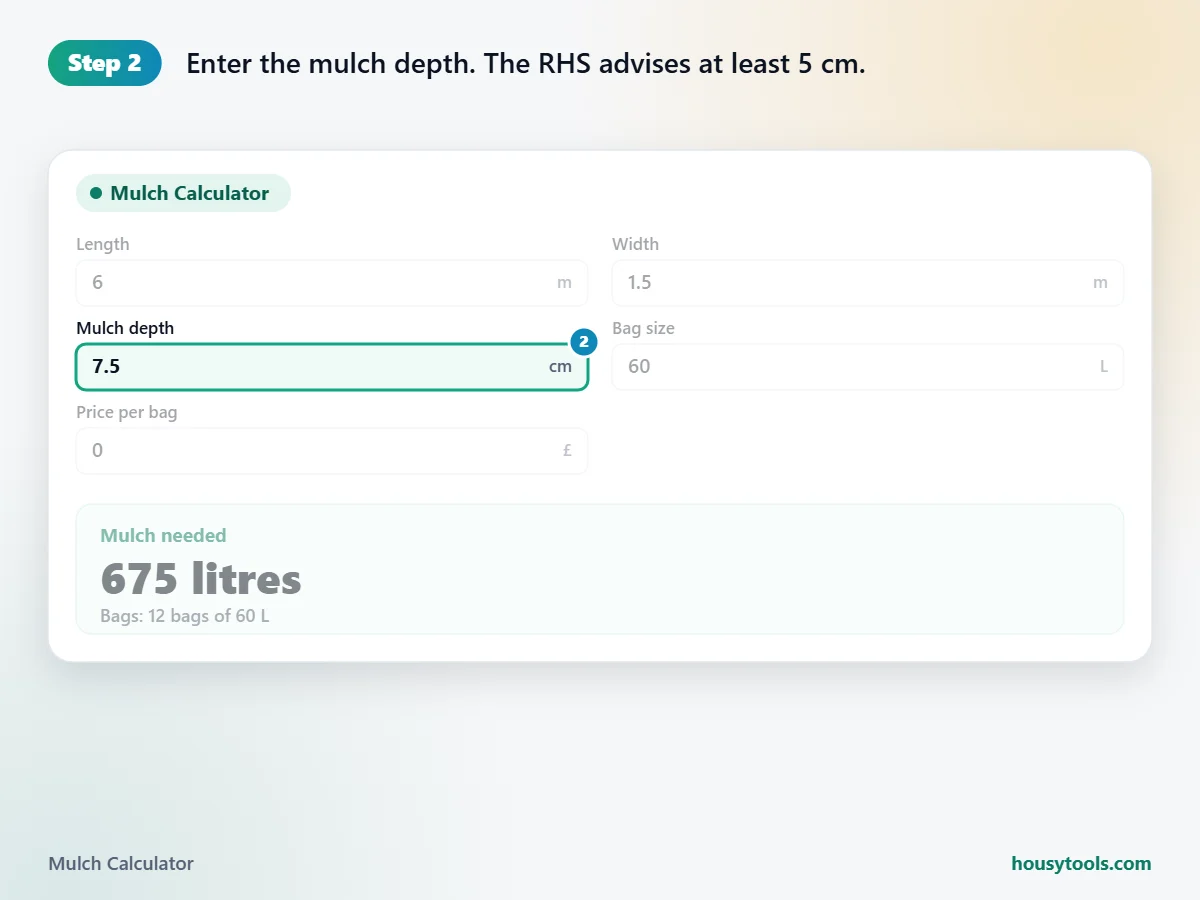
- Enter the mulch depth. The RHS advises at least 5 cm.
- Enter the bag size printed on the bag.
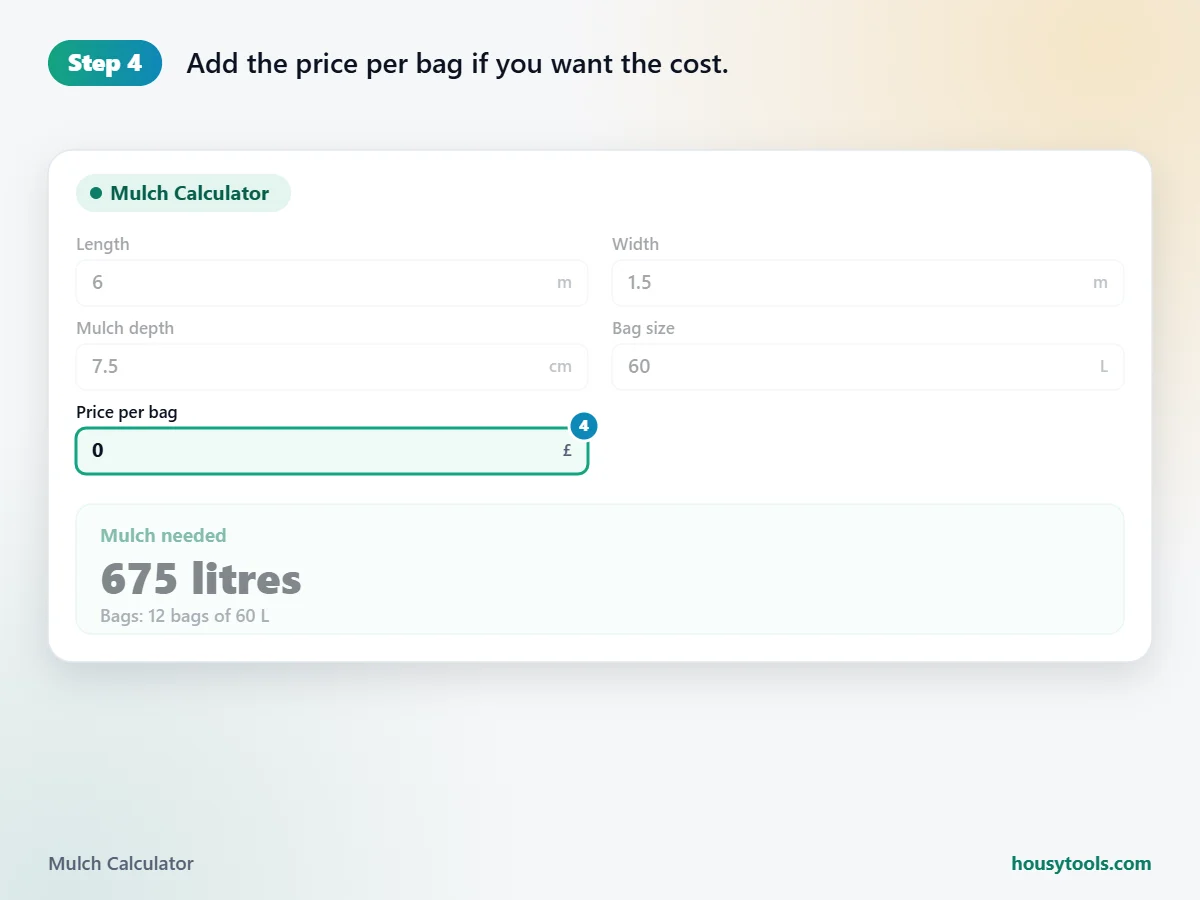
- Add the price per bag if you want the cost.
- Read the litres, cubic metres and bags to buy.


How Deep Should Mulch Be?
The RHS guidance on mulches says mulch should be at least 5 cm and ideally 7.5 cm thick to suppress weeds and hold moisture in the soil.
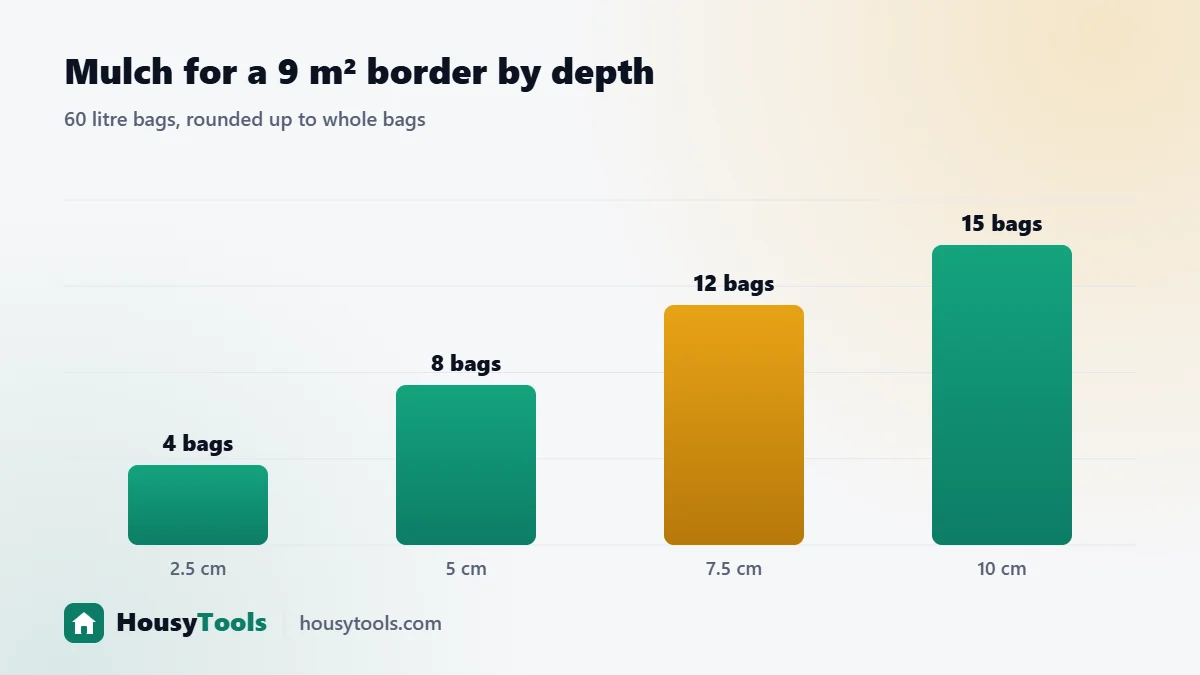
Depth makes a big difference to the order: covering the same 9 m² border at 7.5 cm takes three times as much mulch as at 2.5 cm. A thin layer looks tidy for a few weeks but breaks down quickly and lets weeds through, so it is usually a false saving.
| Depth | Litres per m² | Litres for 9 m² | 60 litre bags |
|---|---|---|---|
| 2.5 cm | 25 L | 225 L | 4 |
| 5 cm | 50 L | 450 L | 8 |
| 7.5 cm | 75 L | 675 L | 12 |
| 10 cm | 100 L | 900 L | 15 |
Keep mulch a few centimetres away from tree trunks and shrub stems, because a mound pressed against bark holds damp and can encourage rot.
When Is the Best Time to Mulch?
Mulch is most useful when the soil is moist and warm, typically in mid to late spring or in autumn, and it should go onto weed free, damp soil.
Spreading mulch over dry soil locks the dryness in, and spreading it over frozen soil keeps the cold in. Clear perennial weeds first, water if the ground is dry, then spread the mulch evenly with a rake. If you want to improve the soil as well as cover it, a layer of garden compost works as a mulch too: see the compost calculator.
Bark Chips, Compost or Gravel?
Bark chips last longer and look neat, compost feeds the soil but breaks down faster, and gravel lasts for years but adds nothing to the soil.
The best choice depends on the planting. Shrub borders and paths suit bark, vegetable beds and roses benefit from compost or well rotted manure, and dry gardens and alpines often suit gravel. The gravel calculator works out stone in tonnes if you choose a gravel mulch.
Worked Example: A 10 m by 2 m Shrub Border
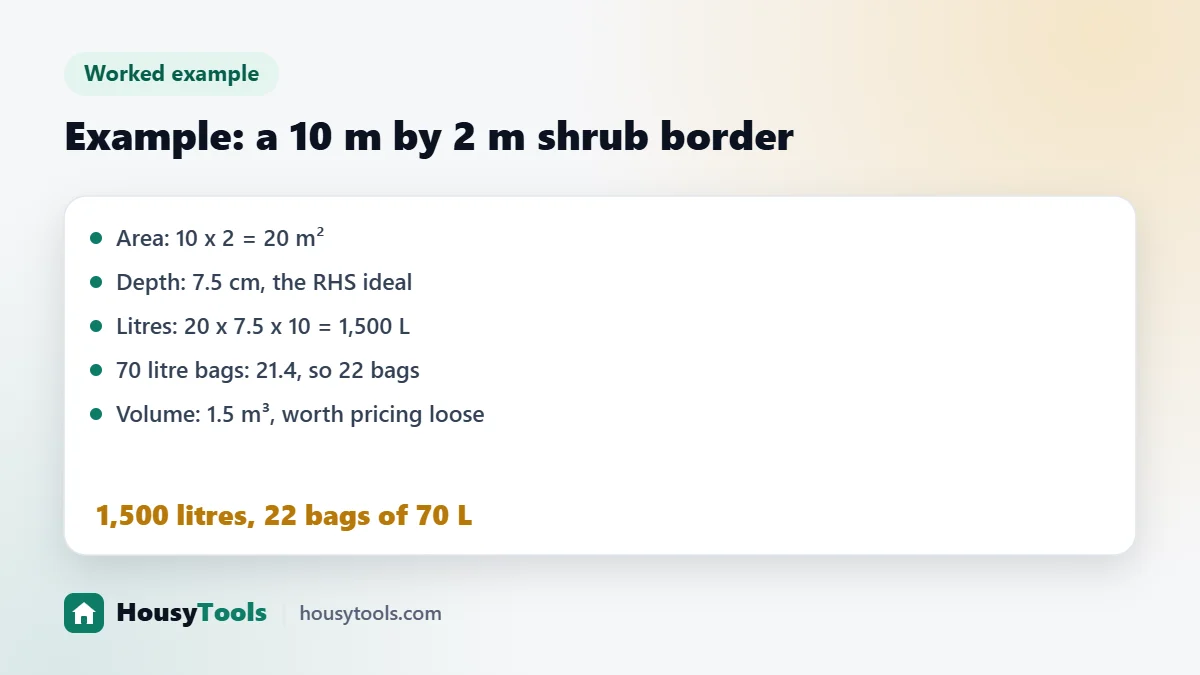
Example: a gardener wants to mulch a 10 m by 2 m shrub border at the RHS ideal depth of 7.5 cm, using bark sold in 70 litre bags.
- Area: 10 x 2 = 20 m²
- Litres: 20 x 7.5 x 10 = 1,500 L
- Bags: 1,500 / 70 = 21.4, rounded up to 22 bags
- Volume: 1.5 m³
Twenty two bags is a lot to carry, so the gardener also asks local suppliers for a price on 1.5 m³ loose or in a bulk bag. A practical tip: top up mulch each year rather than laying a very thick layer at once, so it stays fresh and weed free.
Common Mulching Mistakes
The most common mistake is spreading mulch too thinly, which wastes money because weeds grow through within weeks.
- Mulching over perennial weeds without clearing them first.
- Piling mulch against stems and trunks.
- Mulching dry or frozen soil.
- Mixing up the depth in centimetres and inches when using an online calculator.
- Forgetting to count the area of curved beds properly.
Mulch Calculator FAQs
How much does a 60 litre bag of mulch cover?
At 5 cm deep a 60 litre bag covers about 1.2 m², and at the RHS ideal of 7.5 cm it covers about 0.8 m².
How many litres of mulch do I need per square metre?
Multiply the depth in centimetres by 10. At 5 cm you need 50 litres per m², and at 7.5 cm you need 75 litres per m².
How deep should bark mulch be?
The RHS advises a layer of at least 5 cm and ideally 7.5 cm. Thinner layers break down quickly and do not stop weeds well.
Does mulch need to be replaced every year?
Organic mulches break down over time, so most beds need topping up each year or two to keep the depth at 5 to 7.5 cm.
Should I put a membrane under bark?
A membrane can help on paths and very weedy ground, but in planted borders many gardeners skip it so that the mulch can break down into the soil.
Is mulch cheaper in bags or loose?
For large areas, loose or bulk bag deliveries are often cheaper per cubic metre. Compare the price per cubic metre after delivery.
Checked October 2026. Sources: RHS guidance on mulches.