
Show the formula and working
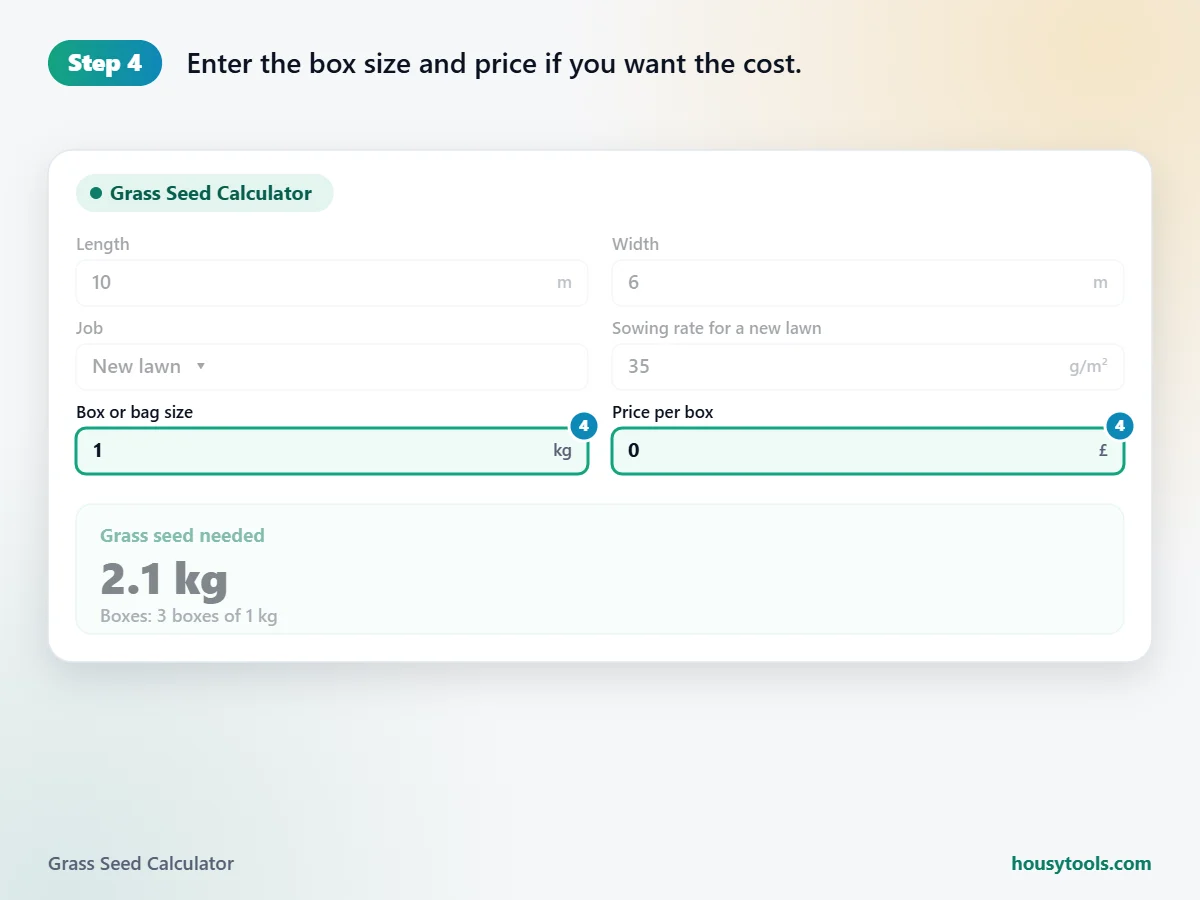
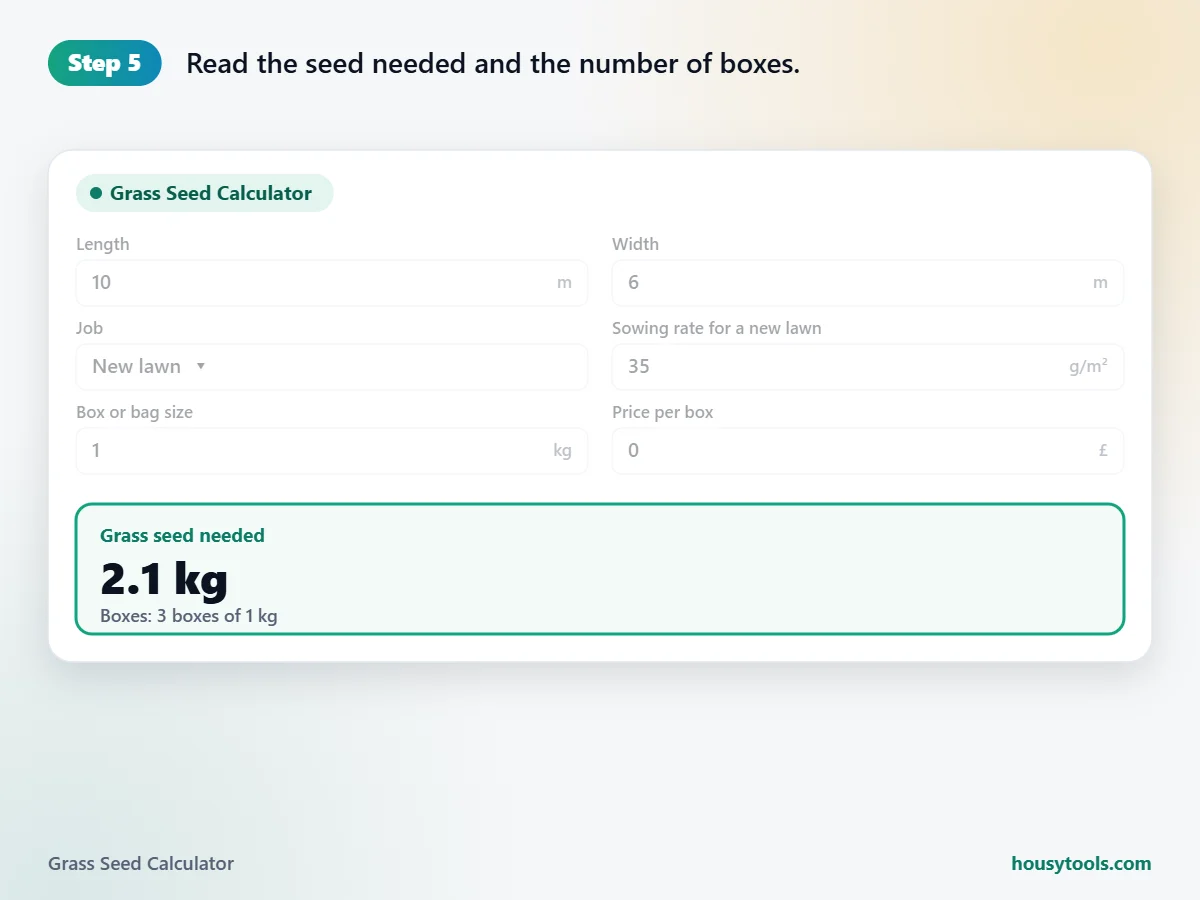
This grass seed calculator works out how much grass seed you need to sow a new lawn or to overseed a thin one, in grams, kilograms and boxes. Enter the lawn size in metres or feet, choose the job, and enter the sowing rate printed on your seed box. Overseeding uses half the new lawn rate.
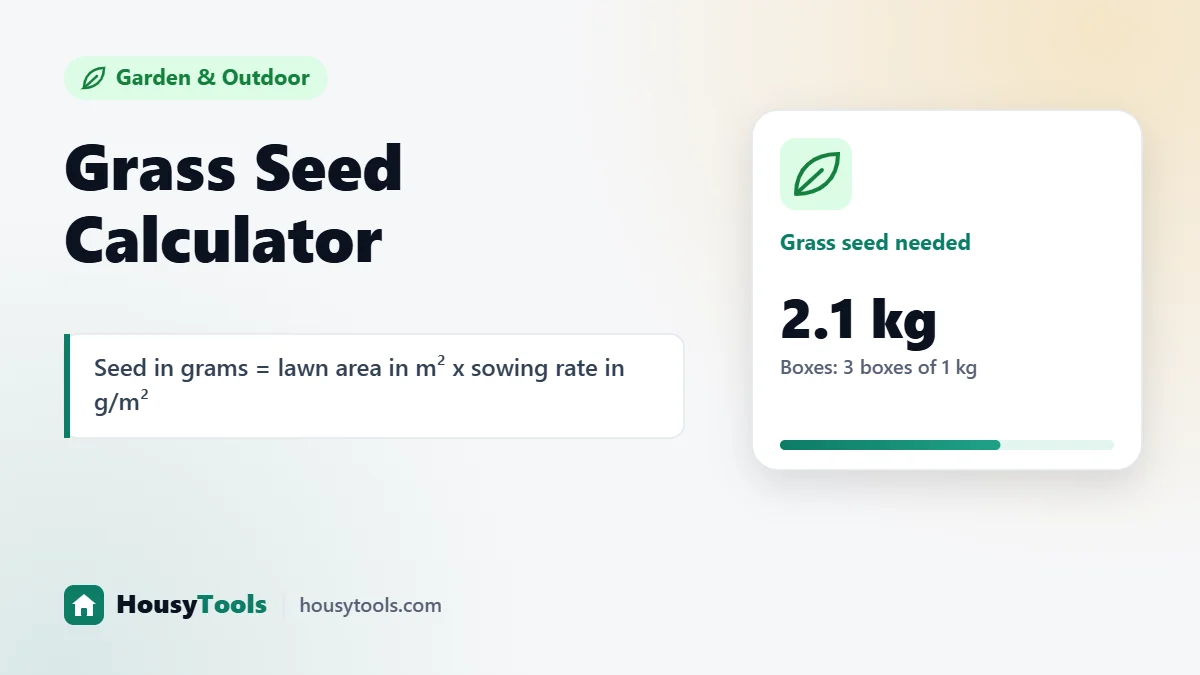
Quick answer: To find how much grass seed you need, multiply the lawn area in square metres by the sowing rate on the box in grams per square metre. A 10 m by 6 m new lawn at an example rate of 35 g/m² needs 2,100 g, or about 2.1 kg. Overseeding the same lawn at half that rate needs about 1.05 kg.
What Is a Grass Seed Calculator?
A grass seed calculator is a tool that multiplies a lawn’s area by a sowing rate to give the weight of seed to buy, and the number of boxes or bags.
The formula in plain words: area equals length times width. Seed in grams equals area times the sowing rate in grams per square metre. For overseeding an existing lawn, the calculator halves the rate, because you are filling gaps rather than starting from bare soil. Divide by the box size and round up to whole boxes.
How Do You Use the Grass Seed Calculator?
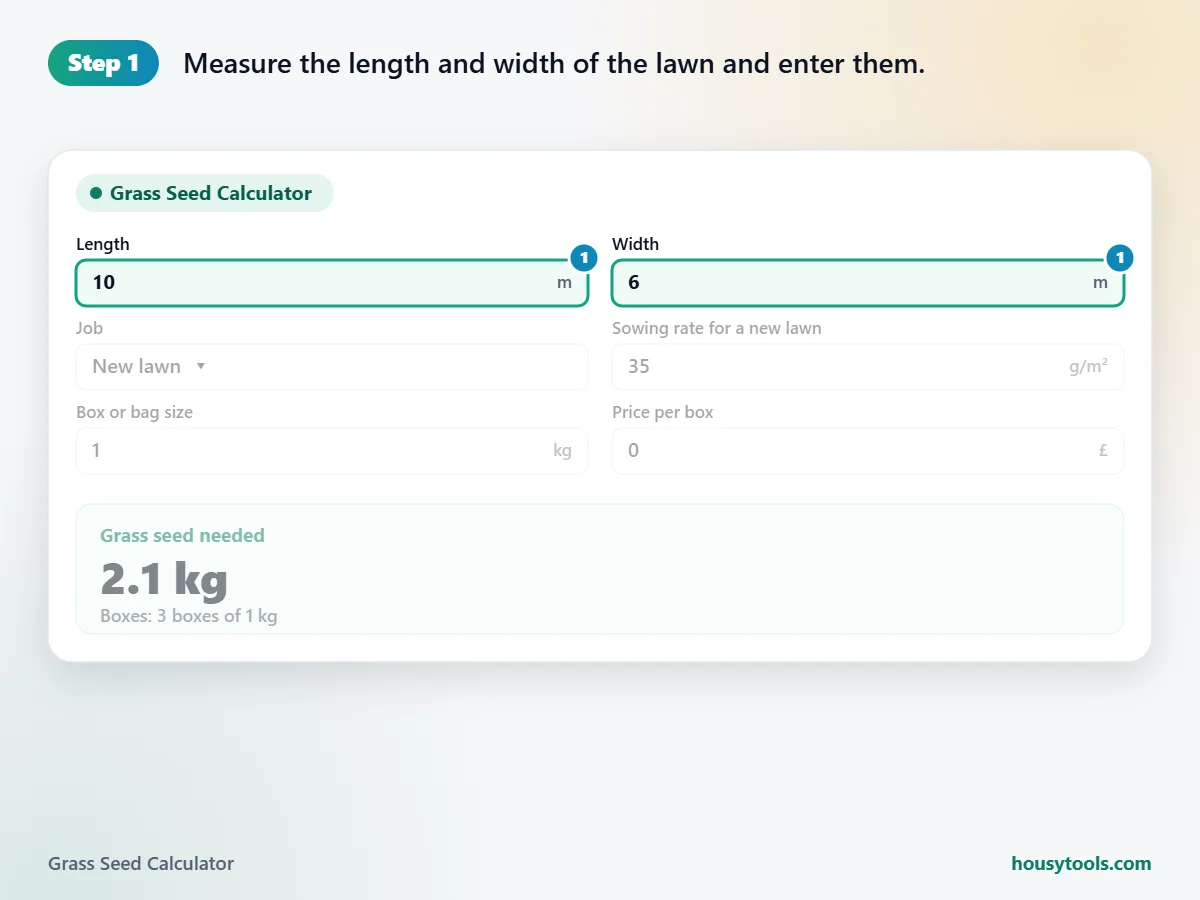
- Measure the length and width of the lawn and enter them.
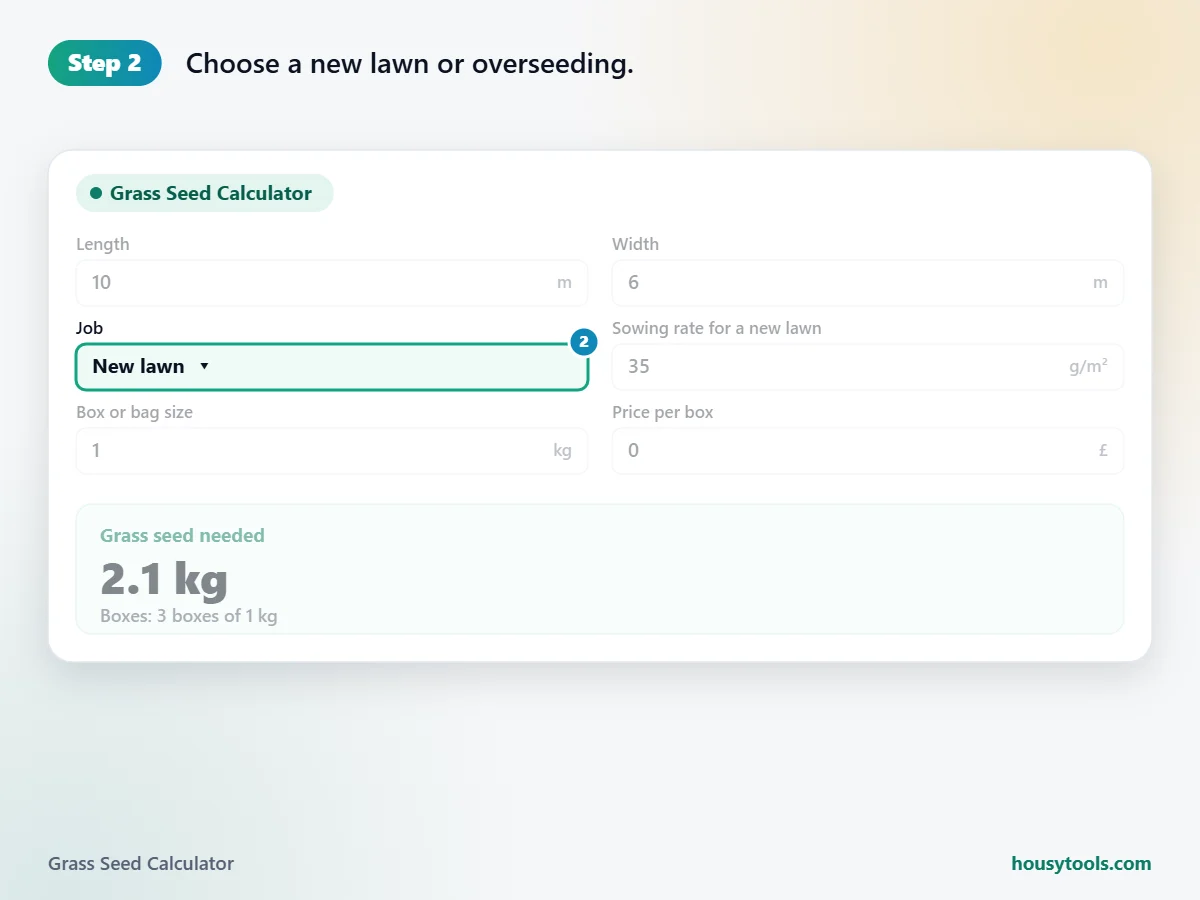
- Choose a new lawn or overseeding.
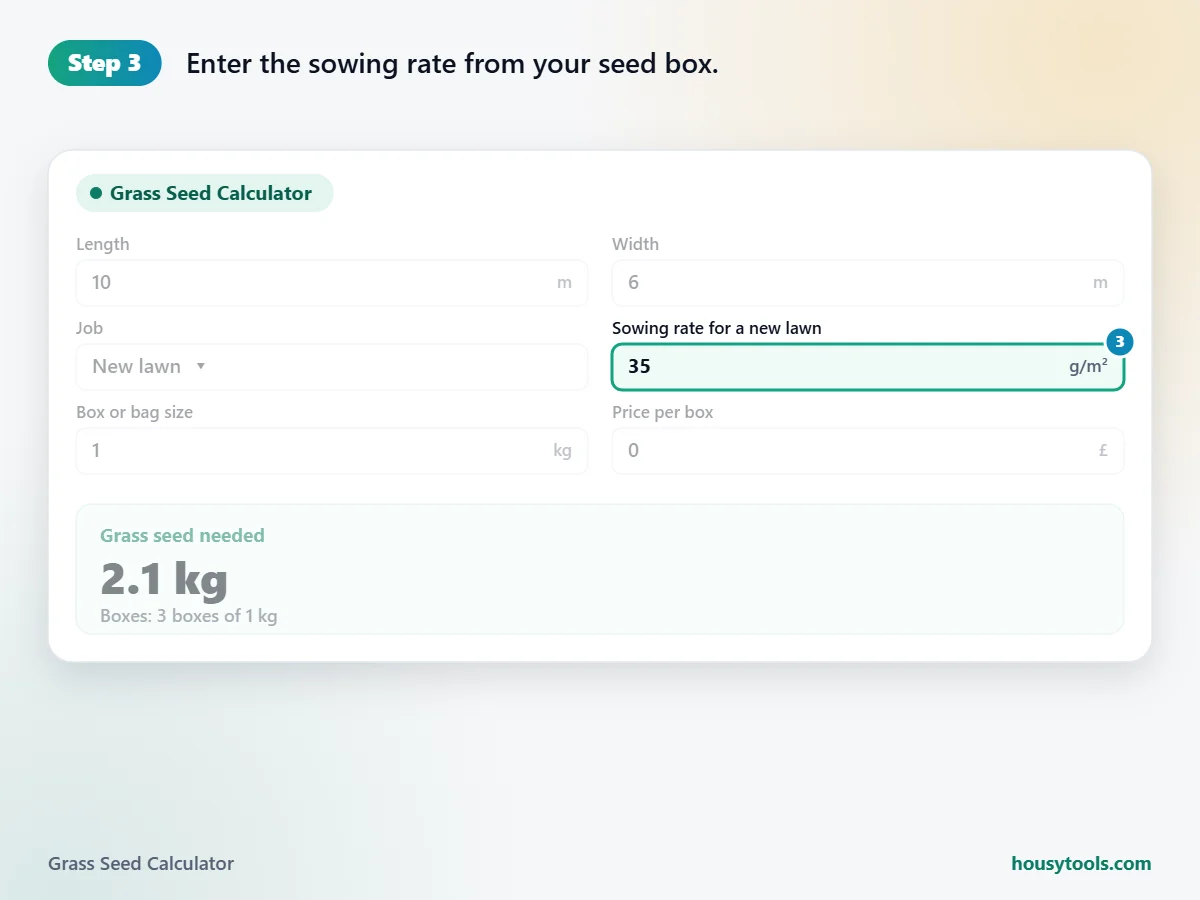
- Enter the sowing rate from your seed box.
- Enter the box size and price if you want the cost.
- Read the seed needed and the number of boxes.
How Much Grass Seed Do I Need per Square Metre?
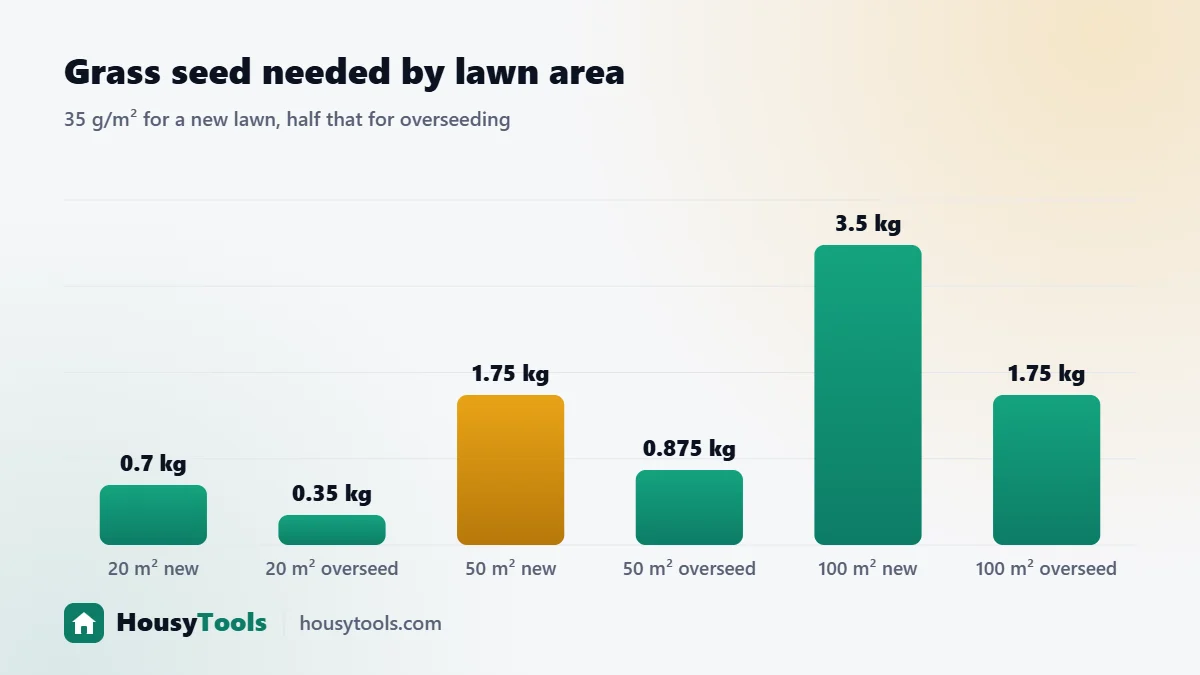
Follow the rate on your seed box, because it varies by mix; this calculator uses 35 g/m² as an example for a new lawn and half that for overseeding.
| Lawn area | New lawn at 35 g/m² | Overseeding at 17.5 g/m² |
|---|---|---|
| 20 m² | 700 g | 350 g |
| 50 m² | 1.75 kg | 875 g |
| 100 m² | 3.5 kg | 1.75 kg |
| 200 m² | 7 kg | 3.5 kg |
More seed is not better. Sowing far above the label rate makes seedlings compete for light and water, which can leave a thin, weak lawn that is more prone to disease. Under sowing leaves gaps that weeds fill.
When Is the Best Time to Sow Grass Seed?
Grass seed germinates best when the soil is warm and moist, so early autumn and mid spring are usually the best times in the UK and northern Europe.
In summer the soil dries out quickly, and in winter it is too cold for good germination. Whenever you sow, keep the seedbed moist until the grass is established, and avoid walking on it. The RHS lawn advice covers preparing a fine, firm seedbed. For a faster result, compare costs with the turf calculator.
How Do You Prepare the Soil for Grass Seed?
Clear weeds and stones, dig or rotavate if the soil is compacted, rake it level, firm it by treading, then rake again to a fine, crumbly surface.
If the ground is poor or uneven, spread a layer of topsoil first; the topsoil calculator works out how much. After sowing, rake very lightly so most seed is just covered, then water with a fine spray.
Worked Example: Patching a Worn 5 m by 5 m Area
Example: a family wants to repair a worn 5 m by 5 m patch where children play. The seed box says 35 g/m² for new lawns, so they overseed at half that rate.
- Area: 5 x 5 = 25 m²
- Rate: 35 / 2 = 17.5 g/m²
- Seed: 25 x 17.5 = 437.5 g
- One 500 g box covers it with a little to spare
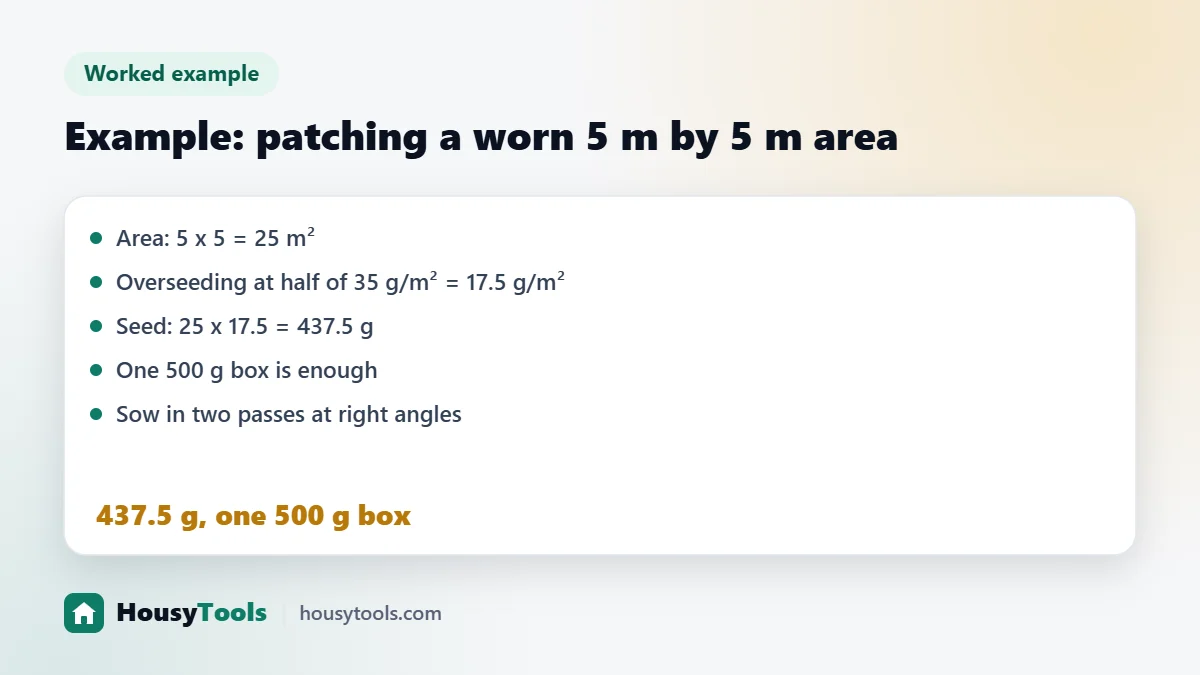
A practical tip: divide the seed into two halves and sow one half walking up and down and the other walking across. Two passes at right angles give far more even cover than one heavy pass.
Grass Seed or Turf?
Seed is much cheaper per square metre and gives you more choice of grass type, while turf gives an instant lawn that can be used much sooner.
Seed suits patient gardeners and larger areas; turf suits families who need the lawn quickly. Once the lawn is established, the lawn fertiliser calculator works out how much feed to spread.
Grass Seed Calculator FAQs
How much grass seed do I need for 100 m²?
At an example rate of 35 g/m², a new lawn of 100 m² needs 3.5 kg. Overseeding the same area at half the rate needs about 1.75 kg.
How much area does 1 kg of grass seed cover?
At 35 g/m², 1 kg covers about 28.6 m² of new lawn. At half that rate for overseeding it covers about 57 m².
Can I put too much grass seed down?
Yes. Too much seed makes seedlings crowd each other, which can lead to weak grass and disease. Stick to the label rate.
How long does grass seed take to grow?
In warm, moist conditions many mixes germinate within one to three weeks. Cold or dry weather slows germination considerably.
Should I overseed in spring or autumn?
Early autumn is often best because the soil is still warm and rainfall is more reliable, but mid spring also works well.
Do I need to cover grass seed?
Rake it lightly so most of the seed is just covered by soil. This improves contact with the soil and gives some protection from birds.
Checked October 2026. Sources: RHS lawn advice, seed packet sowing rates.