
Show the formula and working
This solar panel finance calculator compares the monthly cost of borrowing for solar panels with the savings the panels make, for homes in the UK and Europe. Enter the installed cost, any deposit, the APR and loan term, and the yearly solar benefit, and it shows the monthly repayment, the total interest, whether savings cover repayments and the net gain over the panels’ life.
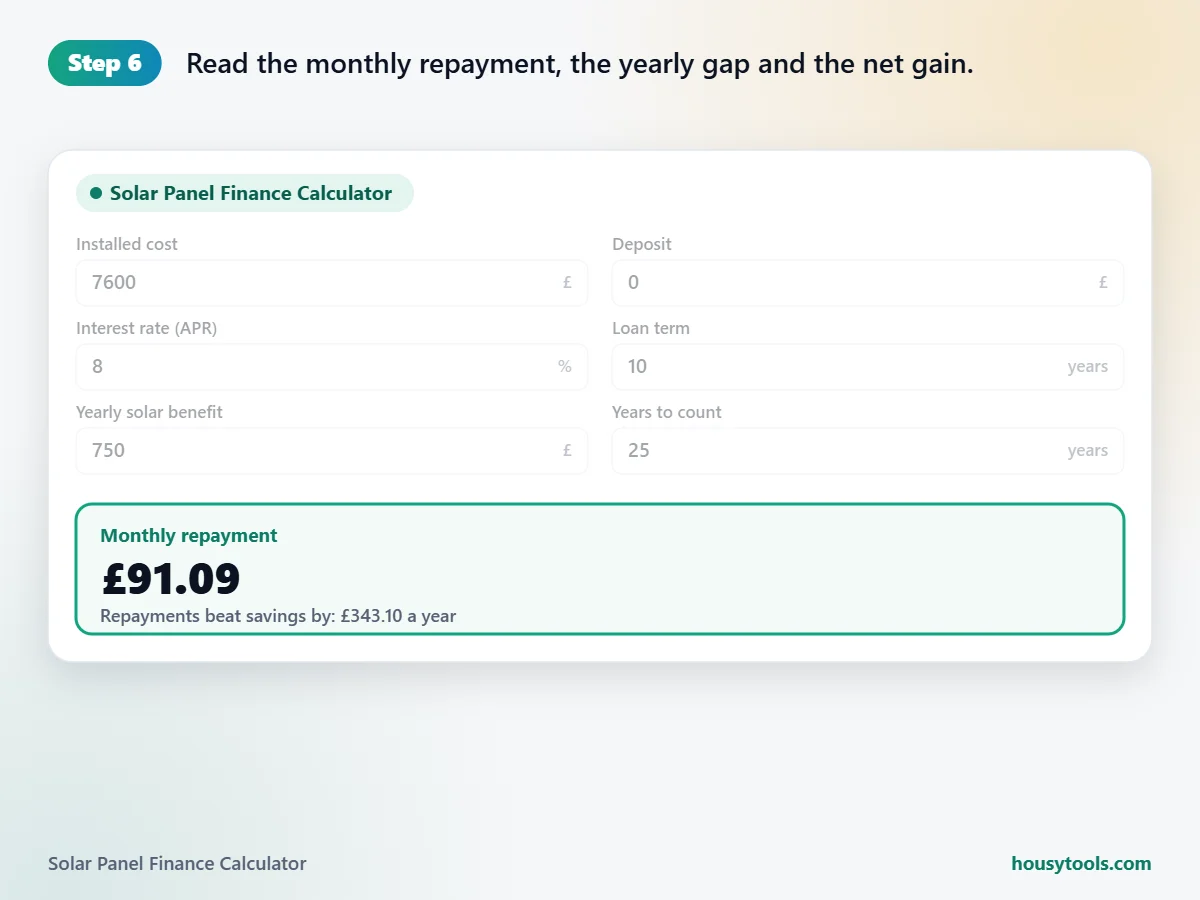
Quick answer: The solar panel finance calculator works out the monthly repayment from the loan amount, APR and term, then compares yearly repayments with the yearly solar benefit. Borrowing £7,600 over 10 years at 8% APR costs about £91 a month, more than a £750 yearly benefit, but leaves you about £7,800 ahead after 25 years.

What Is a Solar Panel Finance Calculator?
A solar panel finance calculator is a tool that shows whether a loan for solar panels is paid for by the savings they make, and what the finance costs over the life of the system.
The formula in plain words: the amount borrowed is the cost minus the deposit. The monthly rate comes from the APR as (1 + APR) to the power of one twelfth, minus 1. The standard loan formula then gives a fixed monthly repayment that clears the loan over the term. Twelve repayments are compared with the yearly solar benefit. Over the years you choose to count, total benefit minus everything you pay, deposit included, gives the net gain.
How Do You Use the Solar Panel Finance Calculator?
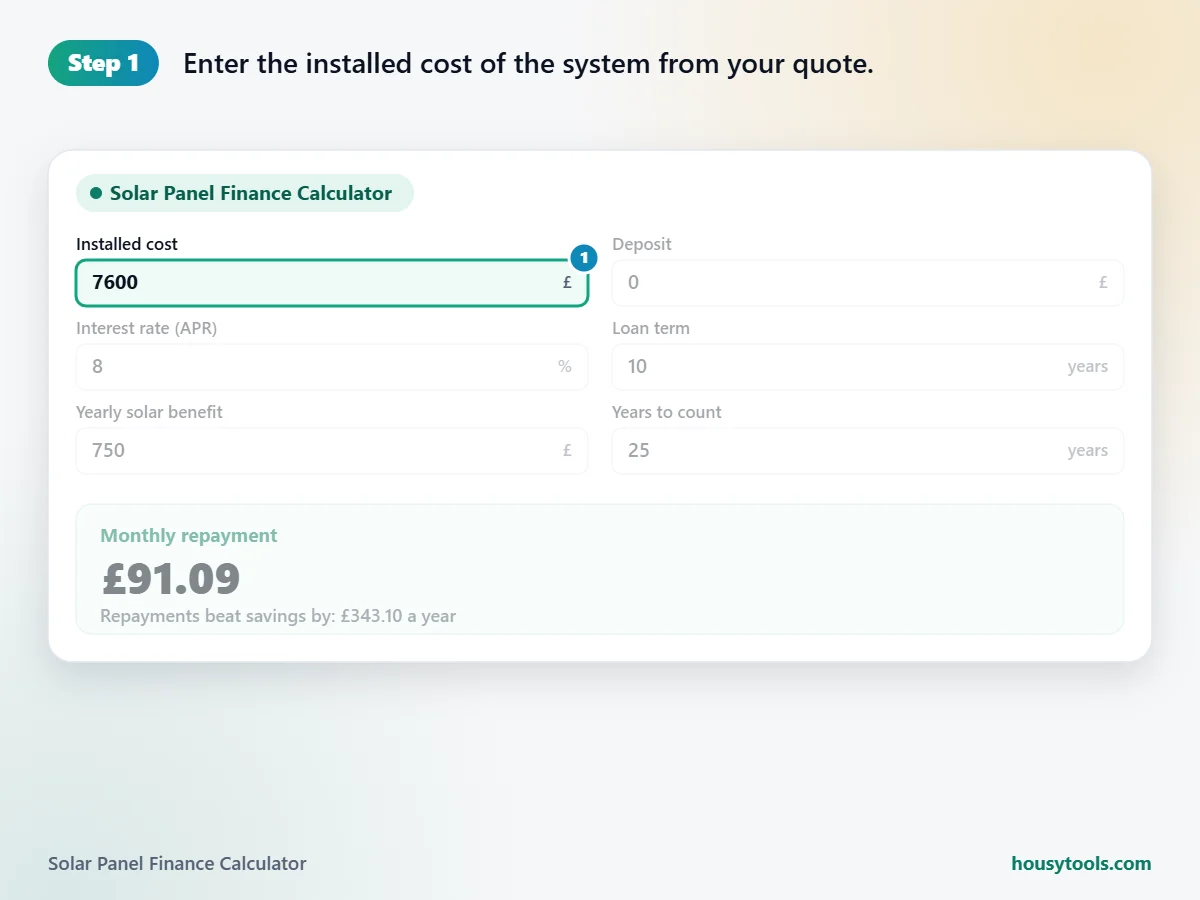
- Enter the installed cost of the system from your quote.
- Enter any deposit you will pay up front.
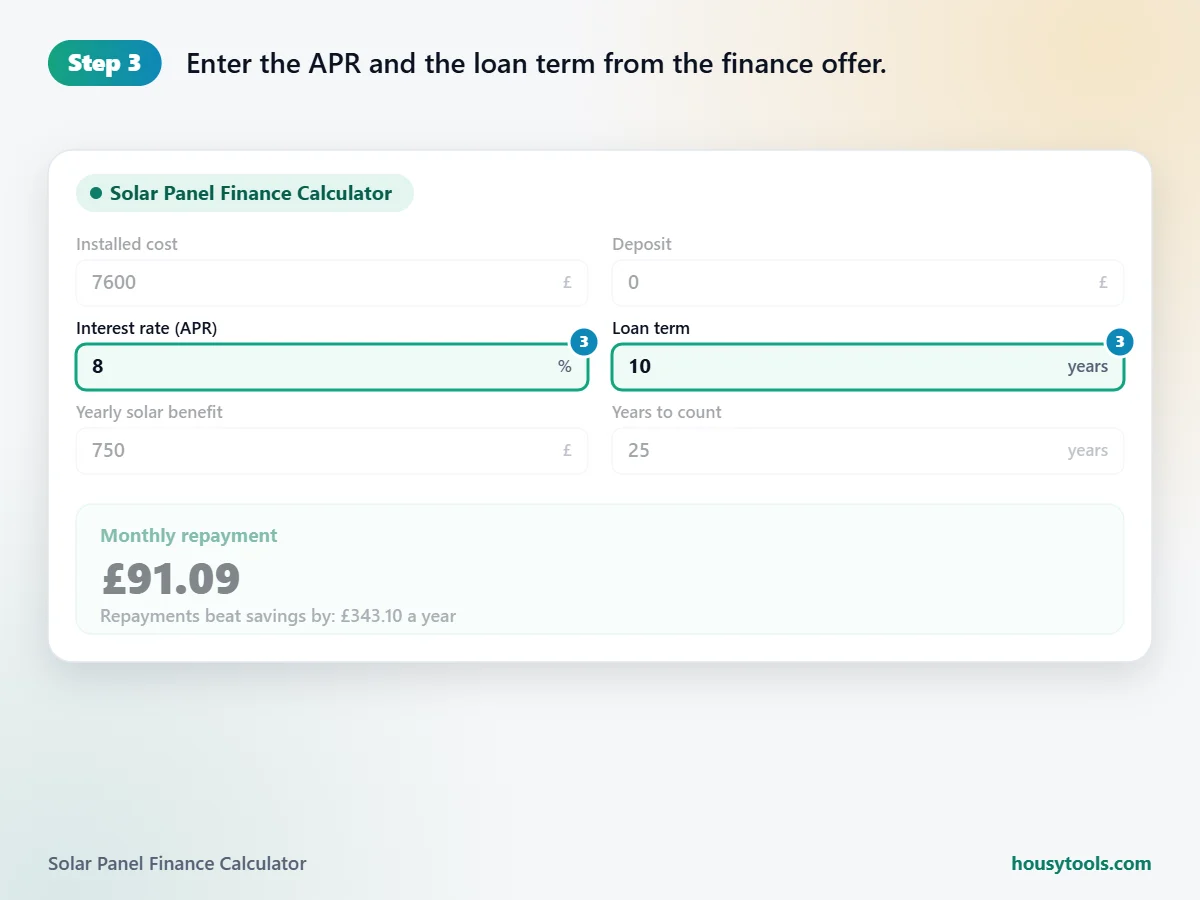
- Enter the APR and the loan term from the finance offer.
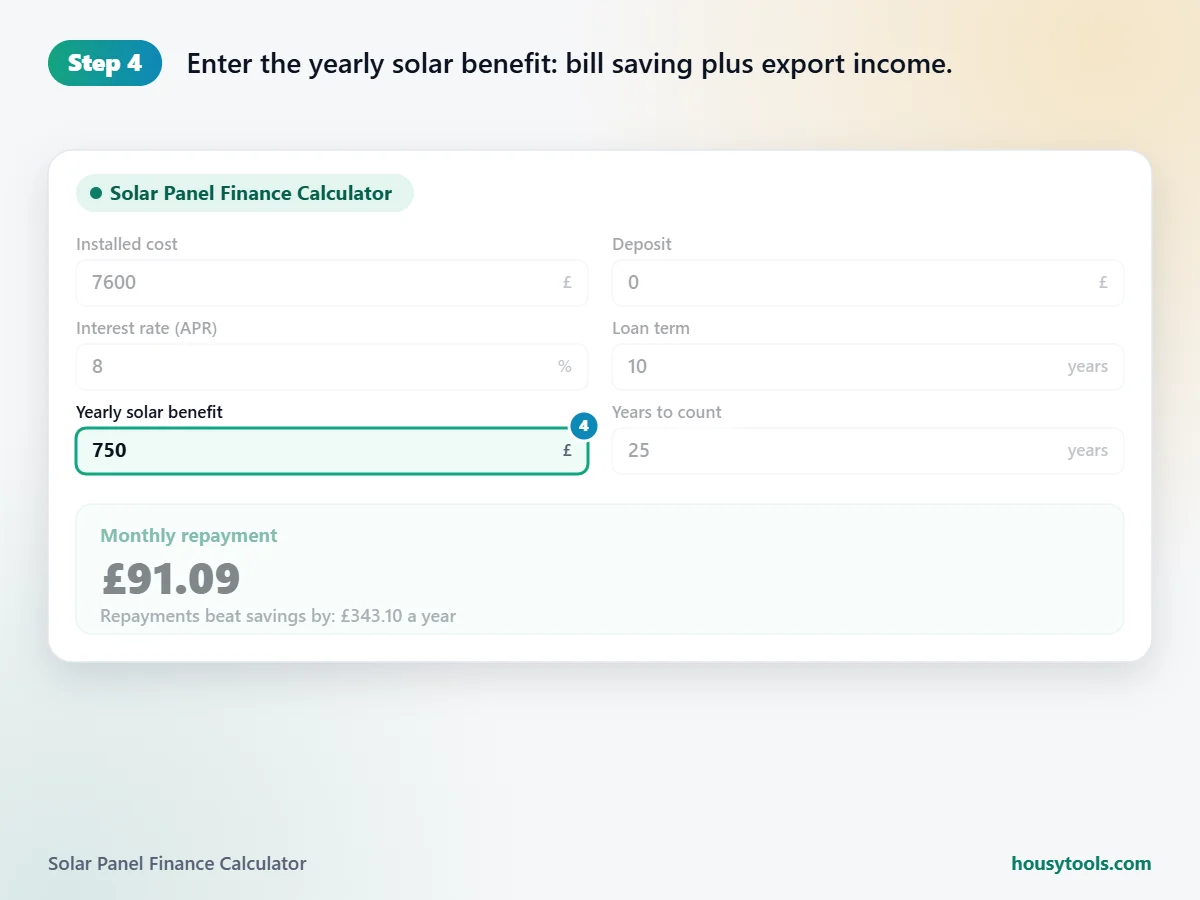
- Enter the yearly solar benefit: bill saving plus export income.
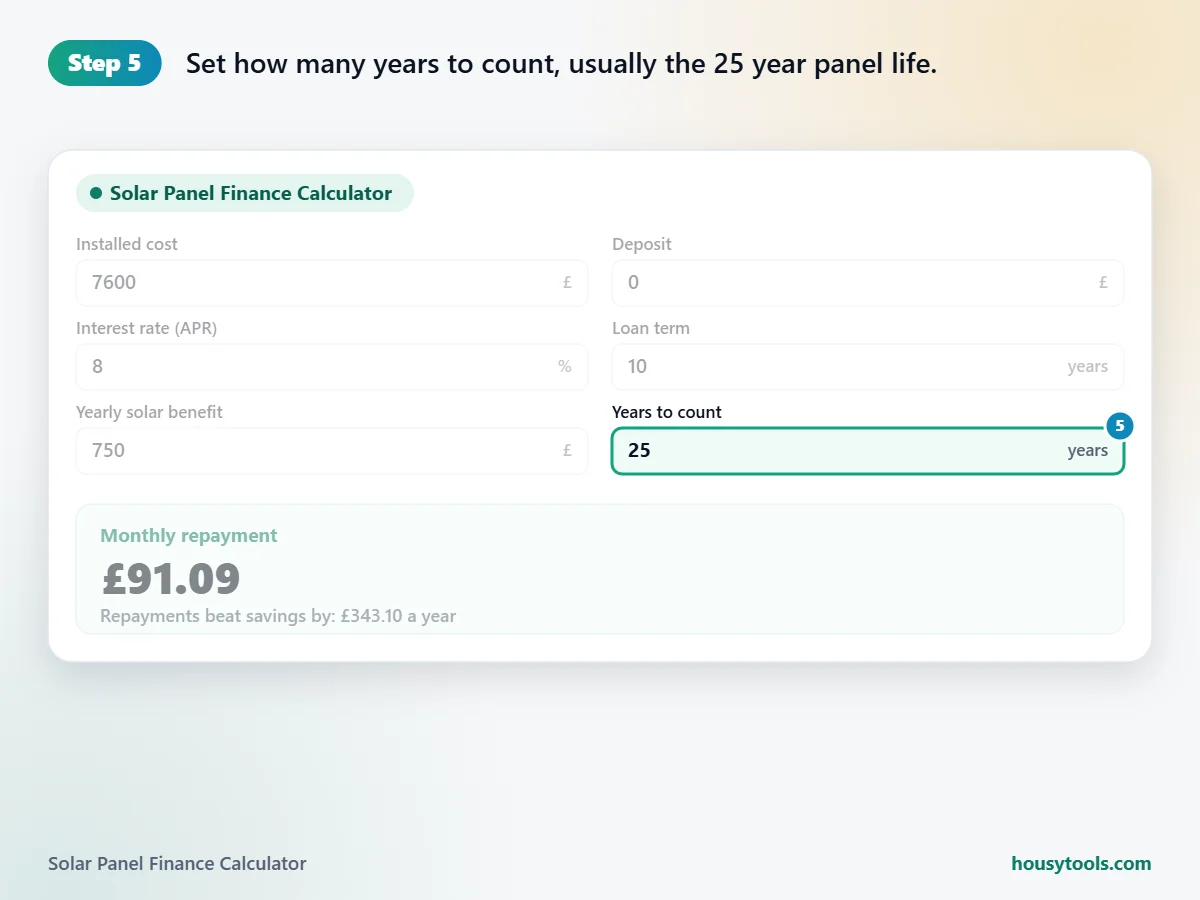
- Set how many years to count, usually the 25 year panel life.
- Read the monthly repayment, the yearly gap and the net gain.

Is It Worth Taking a Loan for Solar Panels?
A loan can still leave you ahead over the panels’ life, but at typical rates the repayments are usually higher than the savings during the loan, so you pay out of pocket for the first years.
| Loan term | Monthly repayment | Total interest | Yearly gap during loan | Net gain after 25 years |
|---|---|---|---|---|
| 5 years | £153.09 | £1,585.23 | minus £1,087.05 | £9,564.77 |
| 7 years | £117.40 | £2,261.68 | minus £658.81 | £8,888.32 |
| 10 years | £91.09 | £3,331.01 | minus £343.10 | £7,818.99 |
| 12 years | £81.11 | £4,079.49 | minus £223.29 | £7,070.51 |
| 15 years | £71.41 | £5,253.81 | minus £106.92 | £5,896.19 |

Longer terms lower the monthly payment but add interest, which cuts the long term gain. Paying cash, or a 0% offer, keeps the full benefit: at 0% the same loan costs £63.33 a month and the 25 year gain rises to £11,150. The Energy Saving Trust puts a typical 4.5 kWp system at about £7,600, which is why that is the default cost.
How Is the Monthly Repayment Calculated?
The repayment uses the standard annuity loan formula: loan times the monthly rate, divided by one minus one plus the rate to the power of minus the number of months.
The APR includes interest and compulsory fees and is quoted as a yearly rate, so the calculator converts it to a monthly rate before using the formula. Your lender’s figures may differ slightly because of how they round, when the first payment falls or optional extras such as payment protection. Always rely on the figures in the credit agreement.
Where Does the Yearly Solar Benefit Come From?
The yearly benefit is the bill saving from solar power you use at home plus the income from what you export, which you can work out with the solar panel calculator.
At the Ofgem price cap unit rate of 26.32p for October to December 2026 and a 12p export rate, a 4.5 kWp London system using half its output at home makes roughly £880 a year, so £750 is a cautious example. A lower benefit than you expect makes finance look worse, so use honest self use and export figures. The solar export calculator helps with the export side.
Worked Example: £9,200 System, £1,000 Deposit
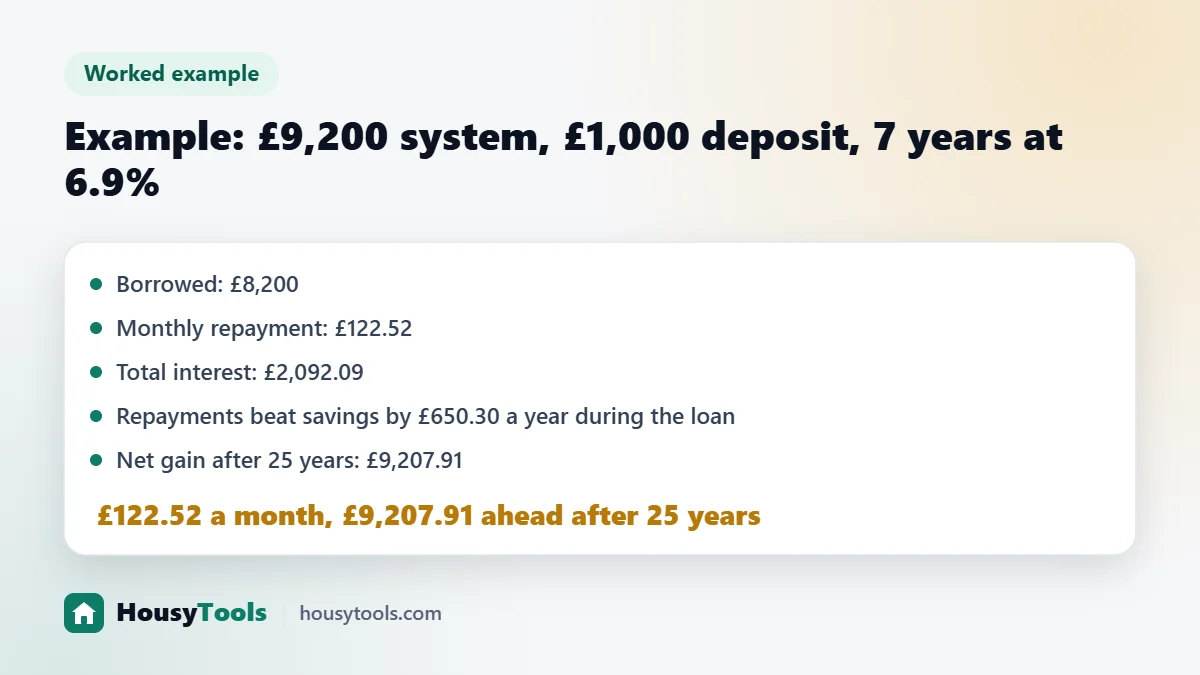
Example: a household is quoted £9,200 for a system with a £1,000 deposit and a 7 year loan at 6.9% APR. The solar panel calculator gives a yearly benefit of £820.
- Borrowed: £9,200 minus £1,000 = £8,200
- Monthly repayment: £122.52, or £1,470.30 a year
- Total interest: £2,092.09
- During the loan: £820 minus £1,470.30 = minus £650.30 a year
- Net gain after 25 years: £820 x 25 minus £11,292.09 = £9,207.91
The household pays about £54 a month more than the panels save for seven years, then keeps the full benefit for the remaining 18 years. Before signing, they check the solar panel cost calculator to make sure the price per kWp is fair, since an inflated price hidden inside a finance deal is a common problem.
Things to Check Before Financing Solar Panels
The most important check is the total amount payable on the credit agreement, compared with the cash price for the same system.
- Compare the APR with an ordinary personal loan or a green home loan from your bank.
- Make sure the lender is authorised by the Financial Conduct Authority in the UK.
- Ask whether early repayment fees apply.
- Do not rely on a salesperson’s savings figure. Work out your own with your tariffs.
- Check the installer is MCS certified, which you need for Smart Export Guarantee payments.
This calculator is for planning only and is not financial advice.
Solar Panel Finance Calculator FAQs
Do solar panels pay for themselves if financed?
Often over their life, but rarely during the loan. In our example a £7,600 loan at 8% over 10 years costs £1,093 a year against £750 of savings, yet leaves about £7,800 ahead after 25 years.
What is a good APR for a solar panel loan?
Lower is better, and 0% offers are sometimes available. Compare the APR with personal loans and green loans from banks, and look at the total amount payable, not just the monthly figure.
Is it better to pay cash or finance solar panels?
Paying cash avoids interest, so it gives the biggest long term gain if you have savings earning less than the loan rate. Finance spreads the cost but adds interest.
Can I add solar panels to my mortgage?
Some lenders offer further advances or green mortgages that can fund home energy improvements. Rates are often lower than personal loans, but the debt runs much longer. Ask your lender.
How long should a solar panel loan be?
Shorter loans cost less interest but have higher monthly payments. A term close to the system’s payback period keeps repayments near the savings, but adds more interest in total.
Does this calculator include inverter replacement?
No. Add an inverter replacement, often needed after around 12 years according to the Energy Saving Trust, by lowering the yearly benefit slightly or increasing the cost.
Checked October 2026. Sources: Energy Saving Trust solar panel advice, Ofgem energy price cap. Not financial advice.